Introduction
Keeping a pet bird happy and active is one of the most important responsibilities of every bird owner. Birds are intelligent, social, and energetic animals that need more than just food and water to live a healthy life. A happy bird is more playful, friendly, and less likely to develop behavioral problems. Whether you have a budgie, cockatiel, lovebird, parrot, or canary, understanding their physical and emotional needs will help them enjoy a long and healthy life.
Many new bird owners believe that placing a bird in a cage with food is enough. In reality, birds need daily interaction, mental stimulation, exercise, and proper nutrition. If these needs are ignored, they may become bored, stressed, or even sick.
In this guide, you will learn practical and easy ways to keep your pet bird happy and active every day. These tips are suitable for beginners and experienced bird owners alike.
Why Your Pet Bird Needs Daily Activity
Birds are naturally active animals. In the wild, they spend hours flying, searching for food, communicating with their flock, and exploring new places. Although pet birds live safely inside our homes, they still have the same natural instincts.
Without enough physical and mental activity, birds can become overweight, depressed, or develop bad habits such as feather plucking, excessive screaming, or aggression. Giving your bird daily opportunities to move, play, and explore helps maintain both physical health and emotional well being.
An active bird is generally healthier, more confident, and easier to train.
Choose a Spacious Cage
A comfortable cage is the foundation of a happy bird. Your bird should have enough room to stretch its wings, climb, and move around without difficulty.
A cage that is too small limits movement and can lead to stress. Always choose the largest cage you can comfortably fit in your home. Make sure the bar spacing is appropriate for your bird’s size to prevent injuries.
Place the cage in a bright room where your bird can see family activities, but avoid direct sunlight all day, kitchens, and areas with strong drafts.
A clean and comfortable living environment encourages your bird to stay active and relaxed.
Provide a Healthy and Balanced Diet
Nutrition plays a major role in keeping your pet bird energetic. A poor diet can cause weakness, obesity, and health problems.
A balanced diet should include high quality bird pellets, fresh vegetables, fruits, seeds in moderation, and clean drinking water every day.
Healthy vegetables include carrots, spinach, broccoli, peas, and bell peppers. Fruits like apples, berries, bananas, and mangoes can also be offered as treats.
Avoid feeding chocolate, avocado, onions, garlic, caffeine, alcohol, and salty or sugary foods because these can be dangerous for birds.
A healthy bird naturally has more energy to play and stay active.
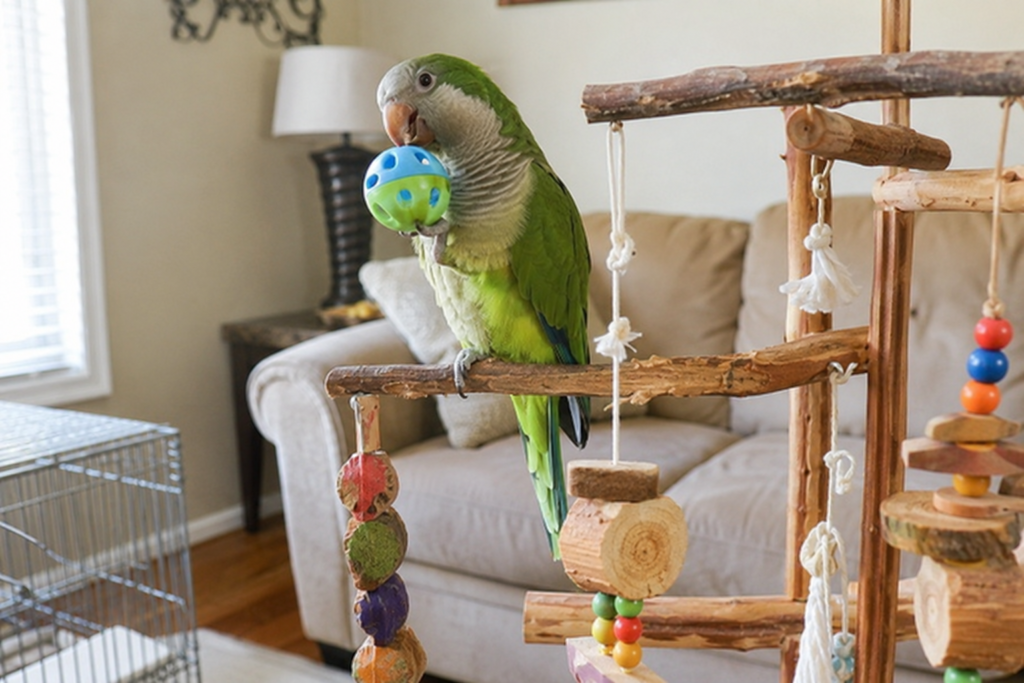
Let Your Bird Exercise Outside the Cage
One of the best ways to keep your pet bird happy and active is allowing supervised time outside the cage every day.
Flying is the best exercise for birds. If your bird’s wings are not clipped and your room is safe, allow it to fly freely for a while. If flying is not possible, climbing, walking, and exploring also provide valuable exercise.
Before letting your bird out, close all windows and doors, switch off ceiling fans, and remove dangerous objects.
Daily exercise helps strengthen muscles, improves heart health, and prevents obesity.
Offer Different Toys
Birds love toys because they keep their minds busy and reduce boredom.
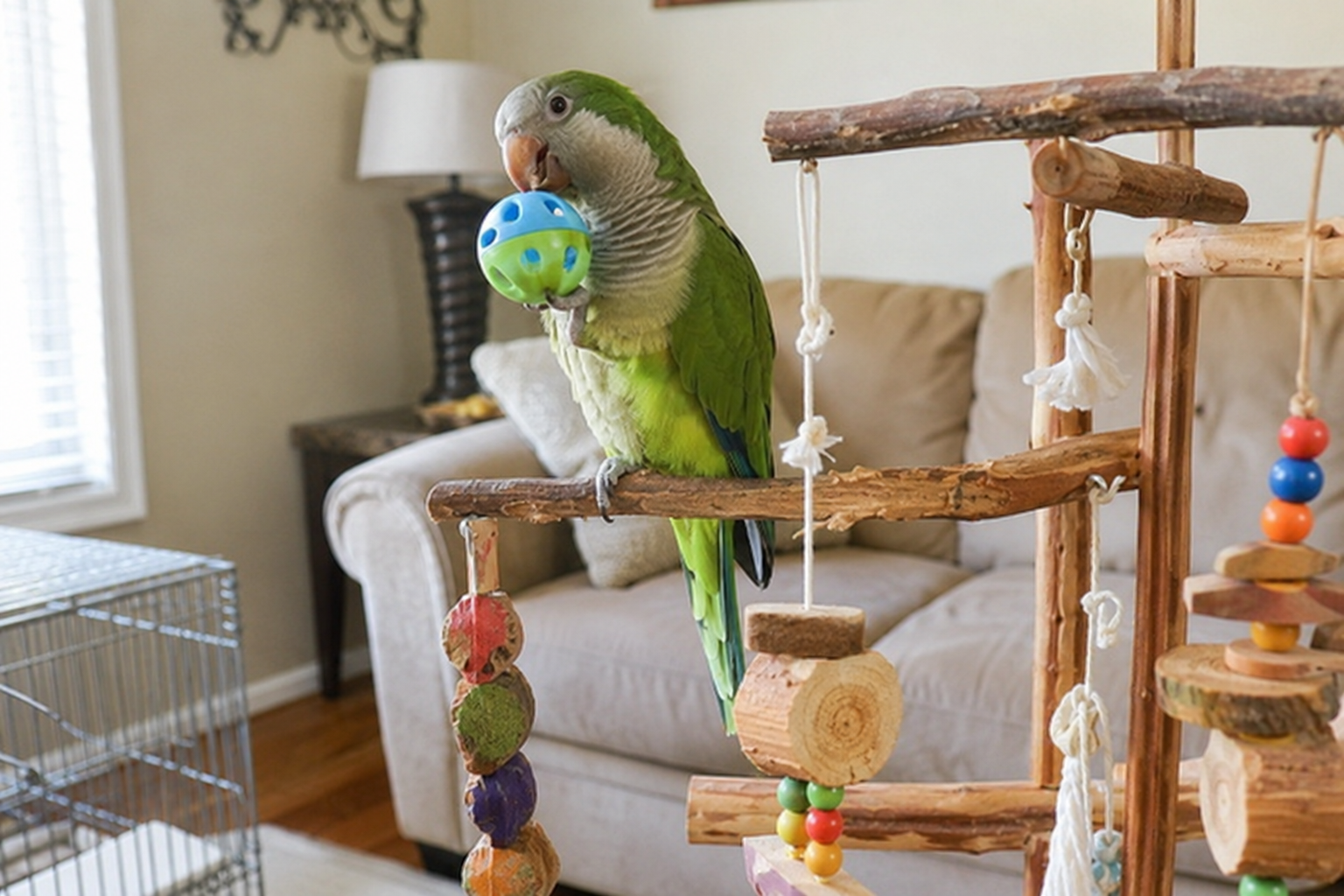
Provide a variety of safe bird toys such as wooden chew toys, bells, ladders, ropes, swings, and puzzle toys. Different textures and shapes keep birds interested.
Rotate toys every week instead of keeping the same toys in the cage all the time. This makes old toys feel new again and keeps your bird curious.
Always inspect toys for damage and replace broken ones to prevent accidents.
Spend Quality Time Together
Birds are social creatures that enjoy companionship. Spending time with your pet every day builds trust and prevents loneliness.
Talk to your bird using a calm and friendly voice. Many birds enjoy sitting on their owner’s shoulder or hand while interacting with the family.
Gentle training sessions also strengthen your relationship. Teaching simple commands like step up or target training provides mental stimulation and builds confidence.
Even fifteen to thirty minutes of personal attention each day can make a big difference in your bird’s happiness.
Keep the Mind Active
Mental exercise is just as important as physical activity.
Birds enjoy solving simple challenges. Hide healthy treats inside safe foraging toys or wrap them in paper that your bird can tear open. This encourages natural searching behavior.
You can also rearrange perches, introduce new toys, or create small obstacle courses to encourage exploration.
Learning new tricks and responding to commands keeps intelligent birds mentally engaged while preventing boredom.
Use Different Types of Perches
Natural wood perches help exercise your bird’s feet while providing comfort.
Using perches of different sizes and textures encourages foot movement and reduces pressure on the same areas.
Avoid using only smooth plastic dowels because they do not provide enough variation for healthy feet.
Position perches at different heights inside the cage so your bird climbs throughout the day.
Allow Safe Social Interaction
Many birds enjoy being around people or other compatible birds.
If you have only one bird, regular interaction with family members becomes especially important. Talk, whistle, or simply sit near the cage while reading or working.
If you plan to introduce another bird, do so slowly and carefully because not all species get along immediately.
Positive social experiences help birds feel secure and emotionally satisfied.
Maintain a Consistent Routine
Birds feel comfortable when they know what to expect.
Try feeding, cleaning, playing, and covering the cage at similar times every day. A predictable schedule reduces stress and helps birds feel safe.
Birds also need enough sleep. Most pet birds require around ten to twelve hours of uninterrupted sleep each night. A quiet and dark environment supports healthy rest.
Good sleep improves mood, energy, and overall health.
Keep the Cage Clean
A clean environment is essential for a healthy bird.
Remove leftover food daily and replace drinking water with fresh water. Clean food bowls regularly and wipe dirty surfaces.
Perform a deeper cage cleaning every week by washing perches, toys, and cage trays using bird safe cleaning products.
Clean surroundings reduce the risk of disease while creating a more comfortable home.
Encourage Natural Behaviors
Birds are happiest when they can perform their natural behaviors.
Provide safe branches for climbing, shredding materials for chewing, and opportunities to forage for food instead of simply placing everything in one bowl.
Many birds enjoy bathing. Offer a shallow dish of clean water or gently mist your bird with water if it enjoys it.
These activities keep birds physically active while supporting emotional well being.
Watch for Signs of Boredom
Understanding your bird’s behavior helps you recognize when something is wrong.
Common signs of boredom include constant screaming, feather plucking, aggressive behavior, sleeping too much, pacing inside the cage, or refusing to play.
If you notice these signs, increase interaction, introduce new toys, provide more exercise, and review your bird’s daily routine.
A bored bird usually becomes happier once its environment becomes more stimulating.
Visit an Avian Veterinarian
Regular health checkups help keep your bird active for many years.
Birds often hide signs of illness until they become seriously sick. Annual examinations by an avian veterinarian can identify health problems early.
If your bird suddenly becomes inactive, stops eating, has breathing difficulties, or changes its behavior, seek veterinary care immediately.
Preventive healthcare is an important part of responsible bird ownership.
Common Mistakes to Avoid
Many owners unintentionally make mistakes that reduce their bird’s happiness.
Keeping birds in small cages, feeding only seeds, ignoring social interaction, leaving the same toys for months, or allowing long periods without exercise can all affect your bird’s health.
Avoid exposing birds to cigarette smoke, strong perfumes, toxic plants, or nonstick cookware fumes because these can be harmful.
Small improvements in daily care can greatly improve your bird’s quality of life.
Conclusion
Learning how to keep your pet bird happy and active is one of the best investments you can make as a bird owner. A healthy diet, regular exercise, mental stimulation, safe toys, social interaction, and a clean environment all work together to create a fulfilling life for your feathered companion.
Every bird has its own personality, so take time to understand what your pet enjoys most. With patience, consistency, and proper care, your bird will reward you with playful behavior, beautiful songs, strong trust, and many happy years together.
By following these simple daily habits, you can ensure your pet bird remains healthy, energetic, and full of life.