Keeping a pet bird is more than giving it food, water, and a clean cage. Birds are highly intelligent animals that need daily mental and physical stimulation. In the wild, they spend hours flying, searching for food, solving problems, and interacting with their flock. When pet birds do not get enough entertainment, they can become bored, stressed, or even develop unwanted behaviors like feather plucking and excessive screaming.
Choosing the right toys and activities is one of the easiest ways to keep your bird happy and healthy. Every bird has its own personality, so it may enjoy some toys more than others. The key is to offer different types of toys and regularly introduce new activities to keep things interesting.
In this guide, you will learn about the best fun toys and activities for pet birds, how to choose safe toys, and simple ways to keep your feathered friend entertained every day.
Why Toys Are Important for Pet Birds
Many bird owners think toys are just decorations inside the cage. In reality, toys are an important part of a bird’s daily life.
Bird toys help improve both physical and mental health. They encourage exercise, reduce boredom, and provide opportunities for natural behaviors like chewing, climbing, foraging, and exploring.
Benefits of bird toys include:
Improved mental stimulation
Better physical fitness
Reduced stress and anxiety
Less feather plucking
Lower chance of screaming out of boredom
Stronger bond between birds and owners
A busy bird is usually a happier bird.
Best Types of Toys for Pet Birds
Different toys serve different purposes. A healthy bird should have a variety of toys instead of only one favorite toy.
Chewing Toys
Birds naturally love to chew. Chewing helps keep their beaks healthy while satisfying their instinct to destroy objects.
Popular chewing toys include:
Wooden blocks
Natural branches
Palm leaf toys
Coconut shell toys
Cardboard toys
Paper rope toys
Always choose untreated wood and bird safe materials.
Foraging Toys
Foraging toys encourage birds to search for food just like they would in nature.
These toys hide treats or pellets inside small compartments, paper cups, or wooden puzzles.
Foraging activities help:
Keep birds busy
Improve problem solving skills
Reduce boredom
Prevent overeating
You can even make simple homemade foraging toys using paper cups or cardboard boxes.
Climbing Toys
Pet birds love climbing because it gives them exercise and confidence.
Good climbing toys include:
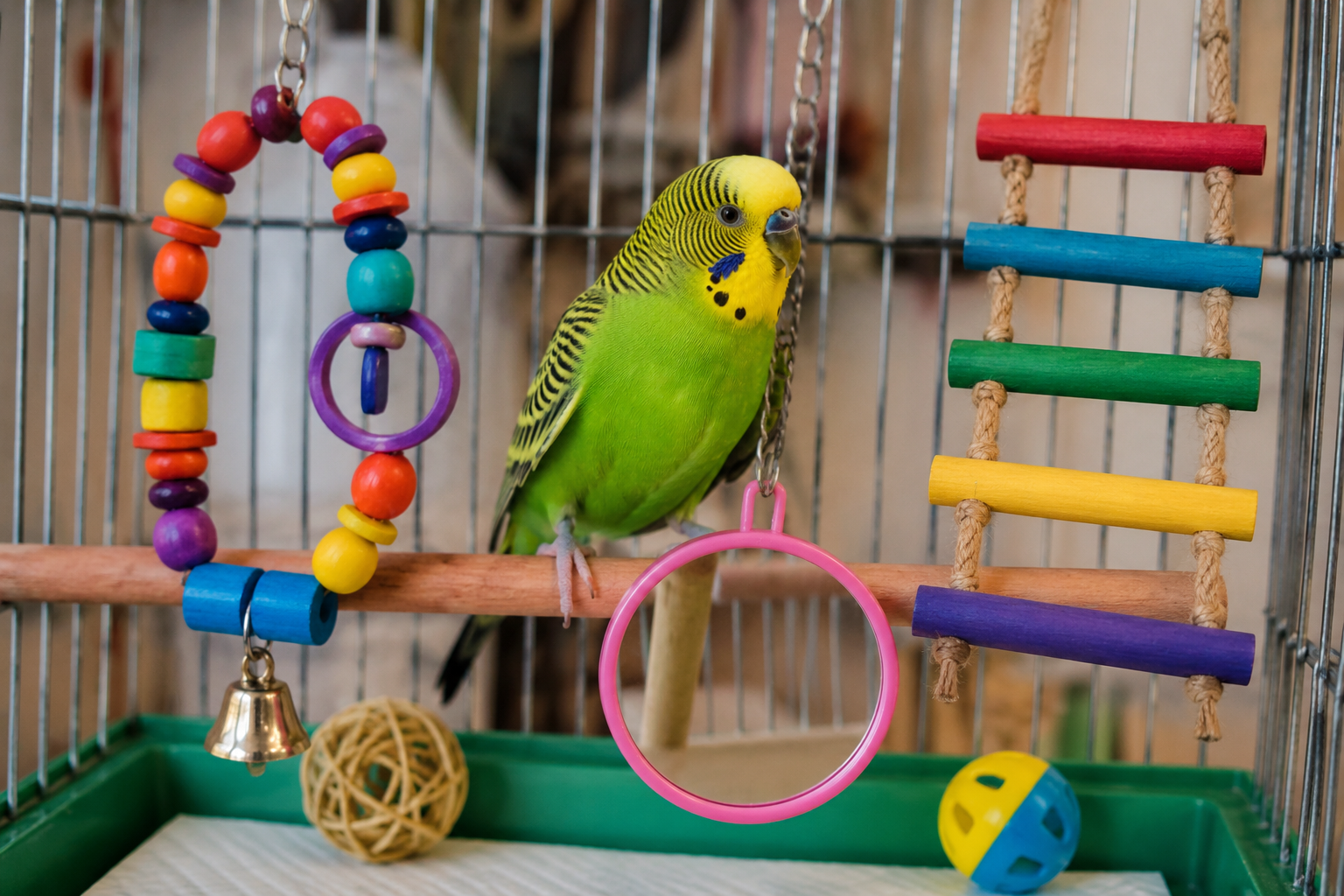
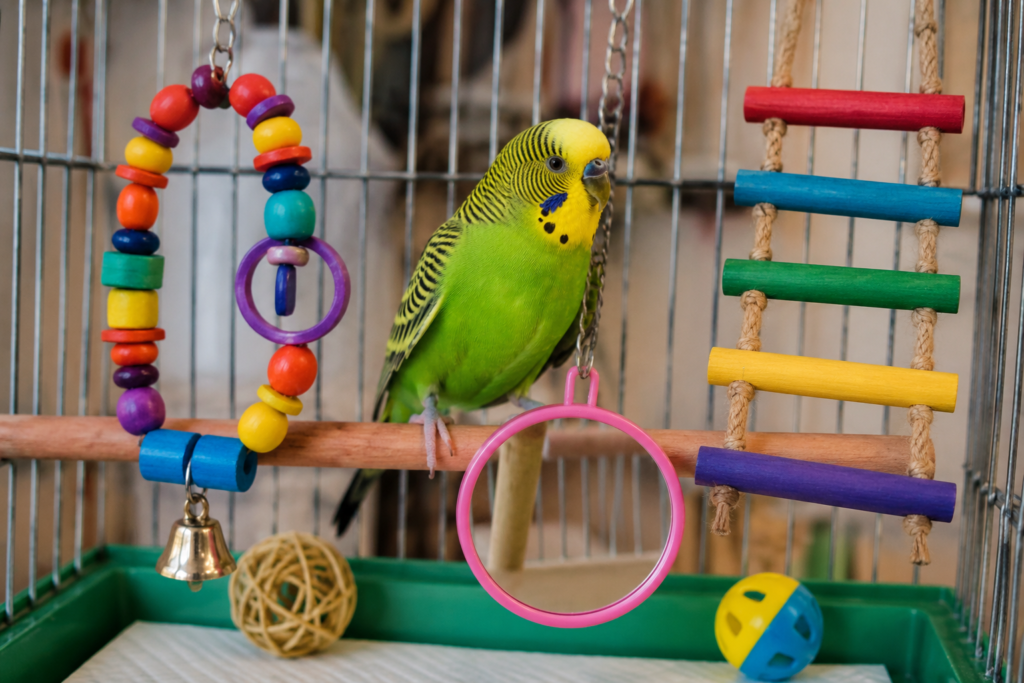
Rope ladders
Wooden ladders
Cotton climbing ropes
Swing bridges
Natural branches
Climbing strengthens muscles while giving birds more ways to move around their cage.
Swings
Most birds enjoy sitting on swings because the gentle movement reminds them of tree branches moving in the wind.
Swings are especially popular with:
Budgies
Cockatiels
Lovebirds
Parrotlets
Small parrots
Adding one or two swings can make your bird’s cage more enjoyable.
Bells and Noise Making Toys
Many birds enjoy making sounds.
Bell toys provide entertainment because birds can push, shake, and ring them.
Make sure the bells are specifically made for birds and do not contain small loose parts that could become dangerous.
Puzzle Toys
Puzzle toys are perfect for intelligent birds.
These toys require birds to move blocks, open doors, or solve simple challenges before getting a reward.
Puzzle toys are especially suitable for:
African Greys
Macaws
Cockatoos
Amazon parrots
Conures
They help prevent boredom while improving thinking skills.
Mirror Toys
Some birds enjoy looking into mirrors.
However, mirrors should only be used carefully because certain birds may become overly attached to their reflection.
If your bird becomes aggressive or spends too much time staring into the mirror, remove it.
Shredding Toys
Birds naturally enjoy tearing things apart.
Shredding toys satisfy this instinct without damaging furniture or household items.
Good shredding materials include:
Paper
Palm leaves
Banana fiber
Cardboard
Soft wood
Birds often spend hours happily destroying these toys.
Best Activities for Pet Birds
Toys alone are not enough.
Birds also need daily interaction and activities outside the cage.
Supervised Out of Cage Time
Allow your bird to spend time outside its cage in a safe room.
Flying, climbing, and exploring help improve fitness and reduce stress.
Always supervise your bird to avoid accidents.
Teach Simple Tricks
Training sessions are excellent mental exercise.
Simple tricks include:
Step up
Wave
Spin
Turn around
Fetch small objects
Training strengthens trust while keeping birds mentally active.
Use positive reinforcement with healthy treats.
Play Hide and Seek
Hide a favorite toy or treat inside paper cups or boxes.
Your bird will enjoy searching for the hidden reward.
This simple game provides natural mental stimulation.
Rotate Bird Toys
Many owners leave the same toys inside the cage for months.
Eventually, birds lose interest.
Instead, rotate toys every one or two weeks.
Store unused toys and switch them regularly.
This makes old toys feel new again.
Play Music
Some birds enjoy listening to soft music.
Classical music, gentle instrumental songs, or nature sounds may help birds relax.
Many parrots even dance when music plays.
Avoid extremely loud music because birds have sensitive hearing.
Talk with Your Bird
Birds are social animals.
Talking with your bird throughout the day keeps it engaged.
Many parrots enjoy learning words and copying sounds.
Even birds that never speak enjoy hearing familiar voices.
Create an Indoor Playground
If you have enough space, create a bird play area outside the cage.
Include:
Perches
Ladders
Swings
Ropes
Chewing toys
Food puzzles
This encourages daily exercise and exploration.
Introduce Safe Natural Branches
Fresh branches provide new textures and surfaces for climbing and chewing.
Bird safe trees include:
Apple
Willow
Elm
Ash
Pear
Always wash branches thoroughly and avoid branches treated with pesticides.
Use Treat Hunting Games
Instead of placing all food inside one bowl, hide small portions around the cage.
Birds naturally enjoy searching for food.
Treat hunting keeps them active while slowing down eating.
Homemade Bird Toys
You do not always need expensive toys.
Many homemade bird toys are just as entertaining.
Ideas include:
Paper towel rolls
Small cardboard boxes
Paper cups
Untreated wooden blocks
Natural twine
Paper strips
Always avoid glue, toxic paint, staples, tape, or harmful chemicals.
How Often Should You Change Bird Toys?
Birds quickly become familiar with the same environment.
Changing toys every one or two weeks keeps things exciting.
You do not need to buy new toys every time.
Simply rearranging the cage and rotating existing toys creates a fresh experience.
Choosing Safe Bird Toys
Safety is more important than appearance.
Always choose toys made from bird safe materials.
Look for:
Natural wood
Vegetable dyes
Cotton rope
Stainless steel hardware
Bird safe plastic
Avoid toys with:
Rusty metal
Sharp edges
Loose strings
Tiny removable parts
Lead paint
Zinc coated hardware
Inspect toys regularly and replace damaged ones immediately.
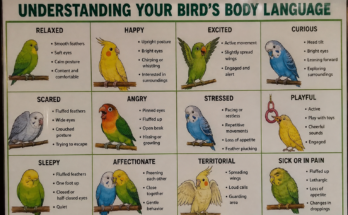
Signs Your Bird Enjoys Its Toys
Happy birds often show excitement around their favorite toys.
Positive signs include:
Playing throughout the day
Chewing safely
Climbing frequently
Exploring different cage areas
Making relaxed sounds
Remaining curious
Active birds usually have better emotional health.
Signs Your Bird Is Bored
A bored bird may develop behavioral problems.
Watch for:
Constant screaming
Feather plucking
Aggression
Sleeping too much
Pacing around the cage
Ignoring toys
Loss of appetite
If these signs appear, introduce new toys and spend more quality time together.
Matching Toys to Different Bird Species
Different birds have different preferences.
Budgies enjoy bells, swings, ladders, and small shredding toys.
Cockatiels love mirrors, soft wood toys, ropes, and swings.
Lovebirds prefer shredding toys, climbing ropes, and paper toys.
Conures enjoy puzzle toys, chewing blocks, and hanging toys.
African Greys benefit from advanced puzzle toys, foraging challenges, and interactive games.
Macaws need large wooden toys, thick ropes, climbing structures, and heavy duty chewing toys.
Choosing toys that match your bird’s size and personality creates the best experience.
Common Mistakes Bird Owners Make
Many owners unintentionally reduce their bird’s quality of life.
Common mistakes include:
Using only one toy
Never rotating toys
Buying unsafe decorations
Ignoring mental stimulation
Leaving birds alone for long hours
Overcrowding the cage with too many toys
Giving toys that are too small or too large
Keeping a balanced cage with open space and several fun toys works best.
Final Thoughts
Providing fun toys and activities for pet birds is one of the best ways to improve your bird’s happiness, health, and overall quality of life. Birds are naturally curious, playful, and intelligent animals that need daily opportunities to explore, climb, chew, solve problems, and interact with their owners.
A combination of chewing toys, foraging puzzles, swings, climbing ropes, and regular playtime outside the cage helps prevent boredom and supports both mental and physical health. Rotating toys every few weeks and introducing new activities will keep your bird excited and engaged.
Remember that every bird has its own personality. Spend time learning what your pet enjoys most, and you will create a fun environment where your feathered companion can thrive for many happy years.