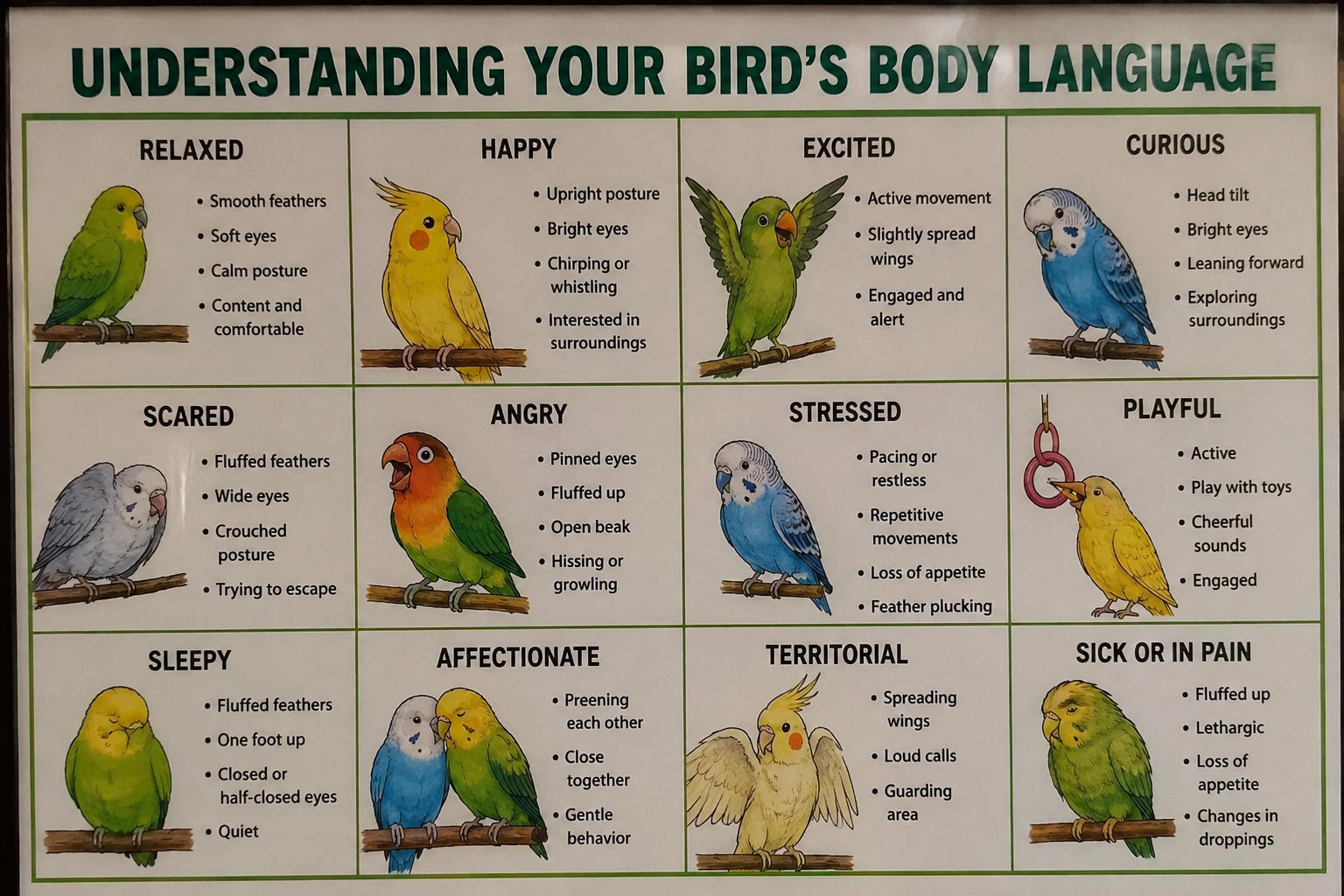
If you own a pet bird, learning to understand pet bird body language is one of the most important skills you can develop. Birds cannot speak with words, but they communicate clearly through their body movements, sounds, feathers, wings, eyes, and posture. Every action your bird makes has a meaning. Once you learn these signals, you can build a stronger relationship with your feathered friend and respond to its needs more effectively.
Many new bird owners misunderstand their pet’s behavior. A bird that looks calm may actually be scared. A bird that appears excited may be preparing to bite. Knowing the difference helps prevent stress, fear, and unwanted behavior. This guide explains the most common pet bird body language signs and what they mean.
Why Bird Body Language Matters
Birds are prey animals in the wild. They naturally hide illness, fear, and weakness to protect themselves from predators. Because of this, they rely heavily on body language instead of obvious expressions.
Understanding pet bird body language helps you:
Improve trust with your bird
Avoid bites and aggressive behavior
Recognize illness early
Reduce stress and anxiety
Create a happier environment
Strengthen your daily bond
The more time you spend observing your bird, the easier it becomes to understand what it is trying to tell you.
Relaxed and Happy Body Language
A relaxed bird usually shows several positive signs at once.
Its feathers look smooth and slightly fluffed. It stands comfortably on one foot or both feet without appearing tense. The eyes look soft, and breathing is calm.
Many happy birds quietly grind their beaks before sleeping. This gentle grinding sound is completely normal and often means your bird feels safe and comfortable.
Some birds gently chirp, whistle, or softly talk when they feel relaxed. These sounds are usually pleasant and calm rather than loud or repetitive.
If your bird is eating, preening, playing with toys, and exploring its cage, these are excellent signs that it feels secure.
Fluffed Feathers
Feathers tell you a lot about your bird’s emotions.
When a bird briefly fluffs its feathers before settling down, it is usually comfortable. Birds also fluff their feathers while sleeping or after grooming.
However, if your bird stays puffed up all day, refuses food, and sits quietly, it could be sick. Long periods of fluffed feathers combined with low energy should never be ignored.
Always observe the entire body rather than one behavior alone.
Eye Pinning
Many parrots display something called eye pinning.
This happens when the pupils quickly become larger and smaller. Eye pinning often shows strong emotions.
Your bird may be excited while playing with a favorite toy.
It may also become highly interested in food or another bird.
In some situations, eye pinning happens before a bite because the bird becomes overstimulated.
Pay attention to the surroundings to understand what emotion is causing this behavior.
Tail Movements
A bird’s tail provides important clues about its mood.
Tail wagging often happens after using the bathroom or after stretching. This is completely normal.
A relaxed bird may gently move its tail while balancing.
Tail fanning is different. When a bird spreads its tail feathers wide, it may be excited, showing off, protecting its territory, or warning you to stay back.
Fast tail bobbing while breathing can sometimes indicate a respiratory illness. If this continues for several hours, contact an avian veterinarian immediately.
Wing Positions
Wing movements are another important part of understanding pet bird body language.
A bird stretching one wing and one leg is simply relaxing its muscles.
Young birds often flap their wings for exercise without flying. This helps build strength.
If your bird holds its wings slightly away from its body during hot weather, it may be trying to cool down.
Drooping wings can sometimes indicate weakness, injury, or illness, especially if they remain that way for a long period.
Head Position
Birds use head movements to communicate many different feelings.
A bird that lowers its head toward you may be asking for scratches. Many parrots enjoy gentle head rubs because they cannot easily groom those feathers themselves.
Tilting the head often shows curiosity. Your bird may be trying to understand a sound or focus on something interesting.
Rapid head movements usually mean excitement or alertness.
Young birds may bob their heads frequently while begging for food.
Adult birds may also bob their heads when they feel excited or want attention.
Beak Behavior
The beak is more than a tool for eating.
A bird that gently taps or rubs its beak against a perch is often cleaning it.
Beak grinding before bedtime usually means your bird feels safe and relaxed.
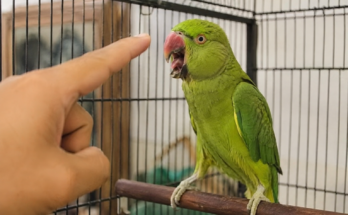
Opening the beak with hissing is a warning sign. Your bird wants more space and may bite if ignored.
Clicking the beak can have different meanings depending on the species. Some birds click when excited, while others use it as a warning.
Always observe the bird’s entire posture before approaching.
Feather Position
Feathers change constantly depending on mood.
Smooth feathers usually indicate a calm bird.
Slightly raised feathers during play often show excitement.
Tightly held feathers against the body may indicate fear or stress.
Neck feathers that suddenly puff out while the bird stares intensely may be a warning that it is becoming aggressive.
Learning these small changes helps prevent unwanted bites.
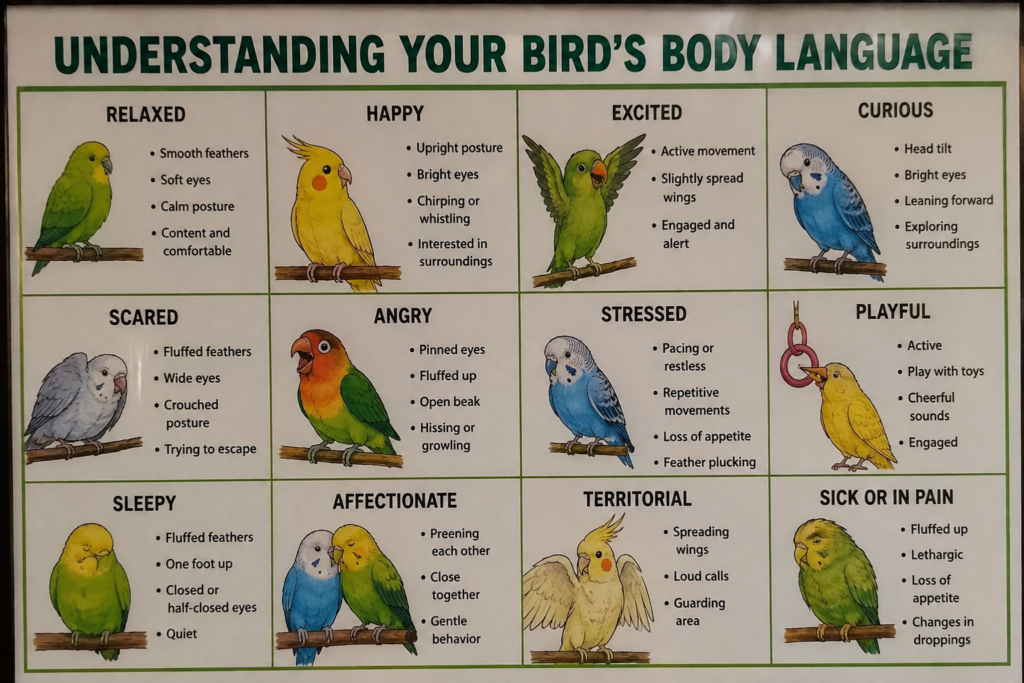
Signs of Fear
A frightened bird often tries to make itself appear smaller or prepare for escape.
Common signs include:
Frozen posture
Wide open eyes
Rapid breathing
Leaning away
Attempting to fly
Holding feathers tightly against the body
Remaining silent after a sudden noise
If your bird becomes frightened, speak softly and move slowly. Never force interaction.
Giving your bird time to calm down builds trust.
Signs of Aggression
Aggressive body language usually appears before a bird bites.
Watch for these warning signals:
Eye pinning
Tail fanning
Raised neck feathers
Open beak
Lunging
Hissing
Stiff posture
Direct staring
If you notice several of these signs together, avoid reaching into the cage. Give your bird space until it relaxes.
Respecting these signals teaches your bird that it does not need to bite to be understood.
Signs Your Bird Wants Attention
Pet birds are social animals.
Many birds ask for attention using body language instead of loud vocalizations.
Your bird may:
Walk toward you
Stretch its neck
Lift one foot
Bob its head
Whistle softly
Climb toward the cage door
Follow your movements
These are positive opportunities to spend quality time together.
Signs of Stress
Stress affects both physical and emotional health.
Common stress signals include:
Feather plucking
Constant screaming
Repeated pacing
Loss of appetite
Excessive sleeping
Rapid breathing
Frequent hiding
Sudden aggression
Stress may be caused by boredom, loneliness, loud noises, poor diet, lack of sleep, or changes in routine.
Identifying the cause quickly helps keep your bird healthy.
Understanding Different Bird Species
Although many body language signs are similar, every species has unique behaviors.
Budgies often communicate with chirping, head bobbing, and playful movements.
Cockatiels use their crest feathers to express emotions. A raised crest often means excitement or curiosity, while a flattened crest may signal fear.
Lovebirds become very expressive with body posture and vocal sounds.
African Greys often communicate through eye pinning and careful observation before reacting.
Cockatoos use their impressive crest feathers to display excitement, fear, or territorial behavior.
Learning about your bird’s specific species helps you understand its unique communication style.
How to Read Body Language Correctly
Never judge your bird by one signal alone.
Instead, observe several behaviors together.
Look at:
Eye movement
Feather position
Tail movement
Wing posture
Sounds
Body stance
Surrounding environment
The combination of these signals provides a much clearer picture of your bird’s emotions.
Building Better Communication
The best way to understand your bird is through daily observation.
Spend time quietly watching your bird during feeding, playing, resting, and training.
Notice how its body changes in different situations.
Respond calmly when your bird shows fear.
Reward relaxed and friendly behavior with praise or healthy treats.
Over time, your bird will learn that you understand its communication, making your relationship much stronger.
Common Mistakes Bird Owners Make
Many owners accidentally misread their bird’s body language.
Some assume every fluffed bird is happy, even though sickness can also cause fluffed feathers.
Others ignore warning signs before reaching into the cage, leading to painful bites.
Some people punish natural communication instead of understanding it.
Patience and observation are much more effective than forcing interaction.
Respecting your bird’s feelings builds lifelong trust.
Final Thoughts
Understanding pet bird body language is the foundation of responsible bird ownership. Every feather movement, eye change, wing position, and vocal sound gives you valuable information about how your bird feels. Learning these signals helps you prevent stress, reduce aggression, improve training, and create a happier home for your feathered companion.
The more time you spend observing your bird, the better you will understand its unique personality. Every bird communicates a little differently, but with patience and daily interaction, you will learn to recognize the signs of happiness, fear, excitement, curiosity, and trust. A bird that feels understood is more confident, healthier, and much more likely to form a strong and lasting bond with its owner.