Introduction
One of the most common questions bird owners ask is, how much should you feed your bird daily? The answer is not the same for every bird because different species have different nutritional needs. A small budgie will eat much less than an African Grey Parrot, while an active cockatiel may need more food than another bird of the same size.
Giving your bird the right amount of food every day is one of the most important parts of proper bird care. Feeding too little can lead to poor health, weight loss, and nutritional deficiencies. Feeding too much can cause obesity, liver problems, and other health issues. Finding the right balance helps your bird stay healthy, active, and happy.
In this guide, you will learn exactly how much should you feed your bird daily, what foods should make up a healthy diet, and how to create a feeding routine that works for your feathered friend.
Why Daily Feeding Matters
Birds have fast metabolisms, especially smaller species. They burn energy quickly throughout the day by flying, climbing, playing, and keeping their body warm. Because of this, they need fresh food every day.
A proper daily feeding schedule provides steady energy, supports healthy feathers, strengthens the immune system, and helps birds maintain an ideal body weight.
Fresh food also encourages natural eating habits and reduces the chance of bacterial growth from old food left in the cage.
How Much Should You Feed Your Bird Daily?
The amount depends on several factors including species, age, activity level, and overall health.
As a general guideline, healthy pet birds usually eat around 10 to 15 percent of their body weight every day. Larger parrots may eat slightly more, while smaller birds may eat less in total but more frequently.
Instead of focusing only on quantity, pay attention to food quality. A balanced diet is much healthier than simply filling the food bowl.
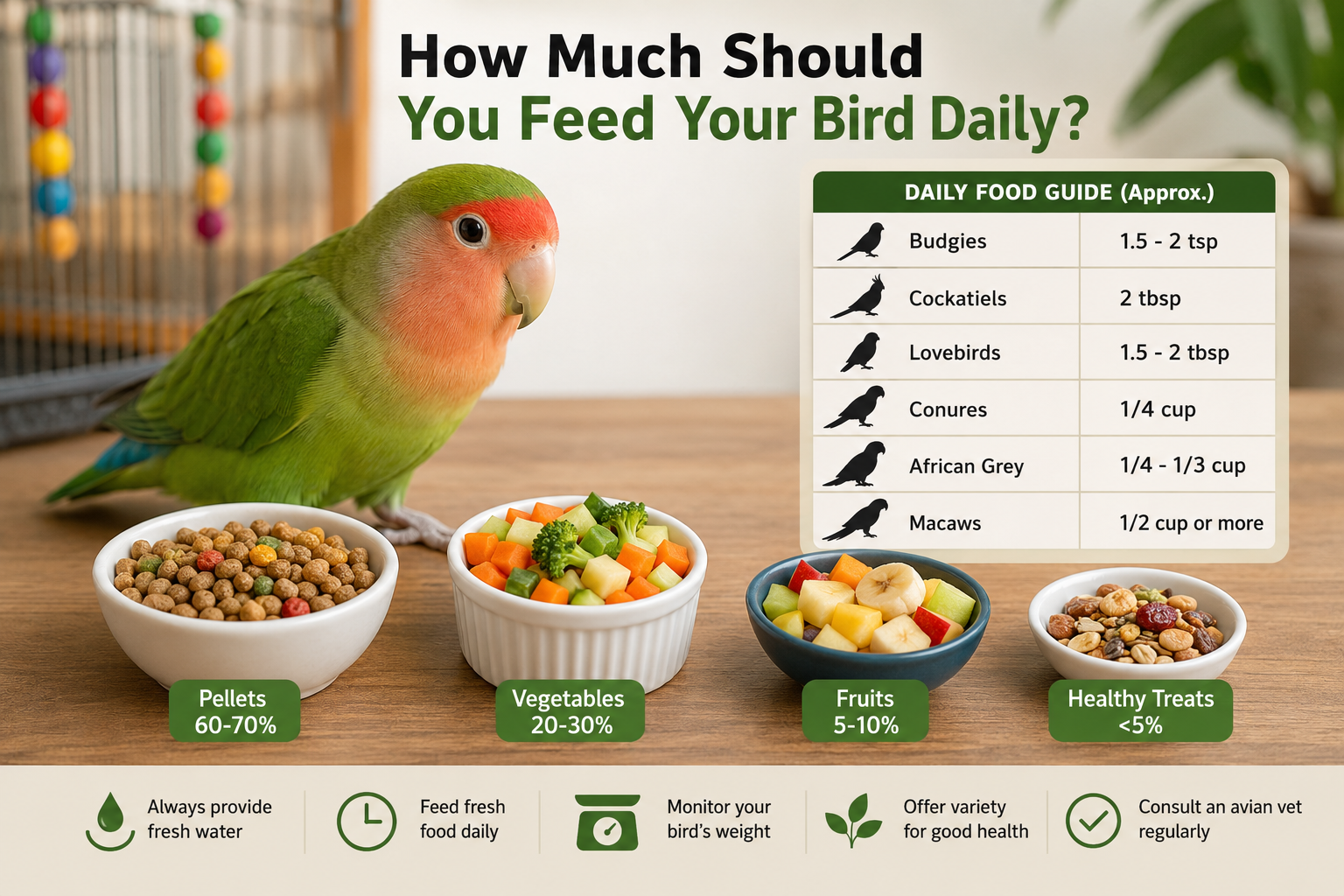
Here are general recommendations for common pet birds.
Budgies
Budgies usually eat about one and a half to two teaspoons of pellets or seed mix daily along with fresh vegetables and occasional fruits.
Cockatiels
Cockatiels generally eat around two tablespoons of pellets or healthy bird food every day along with fresh vegetables.
Lovebirds
Lovebirds normally need about one and a half to two tablespoons of quality food daily plus vegetables.
Conures
Conures usually require around one quarter cup of pellets and fresh foods each day depending on their size and activity level.
African Grey Parrots
African Greys need about one quarter to one third cup of pellets daily with vegetables, fruits, and healthy treats.
Macaws
Macaws eat much larger portions and often need half a cup or more of balanced food every day along with nuts, vegetables, and fruits.
These are only general guidelines. Your bird’s appetite may vary depending on its lifestyle and health.
The Best Daily Diet for Pet Birds
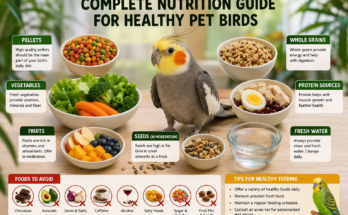
A healthy feeding plan should include several types of food instead of relying on seeds alone.
High Quality Pellets
Pellets should make up about 60 to 70 percent of your bird’s diet. They contain balanced nutrients, vitamins, and minerals that birds need every day.
Choose pellets designed specifically for your bird species.
Fresh Vegetables
Vegetables should make up around 20 to 30 percent of the daily diet.
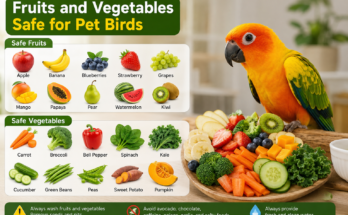
Good choices include spinach, kale, broccoli, carrots, peas, bell peppers, cucumber, and zucchini.
Fresh vegetables provide fiber, antioxidants, and natural vitamins that support overall health.
Fresh Fruits
Fruit should only make up about 5 to 10 percent of the diet because it contains natural sugar.
Safe fruits include apples without seeds, bananas, berries, grapes, mangoes, melons, oranges, and pears.
Offer fruit in small portions several times each week.
Healthy Treats
Treats should be limited to less than five percent of the daily diet.
Healthy treats include small pieces of nuts, cooked grains, cooked beans, and bird safe seeds.
Avoid giving too many treats because they can quickly lead to weight gain.
Should Food Be Available All Day?
Many bird owners leave food available throughout the day, especially for smaller birds like budgies and finches.
However, larger parrots often benefit from scheduled meals. This helps prevent overeating and encourages natural foraging behavior.
A common routine is offering food in the morning, replacing fresh foods during the afternoon, and removing spoiled food before bedtime.
Fresh vegetables and fruits should never remain in the cage for many hours because they spoil quickly.
Fresh Water Is Just as Important
Food alone is not enough. Birds need clean drinking water every day.
Replace water at least once daily. During hot weather or if your bird enjoys bathing in the water bowl, change it several times each day.
Wash both food and water dishes regularly to prevent bacteria from growing.
Signs Your Bird Is Eating Too Much
Overfeeding is becoming more common among pet birds, especially indoor parrots that get less exercise.
Watch for these signs.
Weight gain
Difficulty flying
Fat deposits around the chest
Lack of energy
Heavy breathing after light activity
If you notice these signs, reduce treats and speak with an avian veterinarian before making major dietary changes.
Signs Your Bird Is Not Eating Enough
Birds naturally hide illness, so reduced eating should never be ignored.
Common warning signs include weight loss, weakness, fluffed feathers, reduced activity, and empty food bowls with little actual eating.
If your bird suddenly stops eating or loses weight quickly, contact an avian veterinarian immediately.
How Often Should You Feed Your Bird?
Most pet birds benefit from two main feeding times each day.
Morning is usually the best time to provide pellets and fresh vegetables because birds are naturally hungry after sleeping.
In the evening, offer another portion of pellets along with healthy treats if needed.
Small birds may snack throughout the day, while larger parrots often enjoy structured meal times.
Keeping a regular feeding schedule helps birds feel secure and encourages healthy eating habits.
Foods You Should Never Feed Your Bird
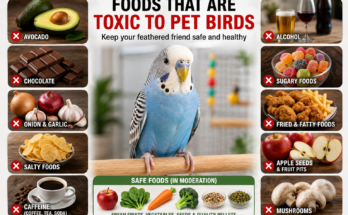
Some foods are dangerous and should never become part of your bird’s daily diet.
Avoid chocolate.
Avoid avocado.
Avoid onions.
Avoid garlic in large amounts.
Avoid alcohol.
Avoid caffeine.
Avoid foods with too much salt.
Avoid foods high in sugar.
Avoid fruit seeds from apples and stone fruits.
Avoid moldy or spoiled food.
These foods can cause serious health problems and may even become life threatening.
Tips for Healthy Daily Feeding
Offer fresh food every morning.
Remove spoiled fruits and vegetables after a few hours.
Measure food instead of guessing.
Provide different vegetables throughout the week.
Introduce new foods slowly.
Monitor your bird’s body weight regularly.
Give your bird opportunities to forage for food.
Keep treats small and occasional.
Always provide fresh clean water.
Visit an avian veterinarian for regular health checkups.
Common Feeding Mistakes
Many new bird owners unknowingly make simple mistakes that affect their bird’s health.
One of the biggest mistakes is feeding only seeds. While birds enjoy seeds, they are often too high in fat and lack important nutrients.
Another mistake is giving too many treats. Birds may prefer sunflower seeds or nuts, but eating them every day can cause obesity.
Some owners also forget to replace fresh vegetables daily, allowing food to spoil inside the cage.
Finally, many people never measure food portions, making it difficult to know whether the bird is eating too much or too little.
Avoiding these mistakes will help your bird stay healthier for many years.
Conclusion
Knowing how much should you feed your bird daily is one of the most important parts of responsible bird ownership. Every bird has unique nutritional needs based on its species, age, size, and activity level. A balanced diet made up of quality pellets, fresh vegetables, small amounts of fruit, and healthy treats provides everything your bird needs to live a long and healthy life.
Watch your bird’s weight, behavior, and appetite regularly. Feed fresh food every day, provide clean water at all times, and avoid harmful foods that can damage your bird’s health. With the right feeding routine, your feathered companion will remain energetic, colorful, and happy for many years.