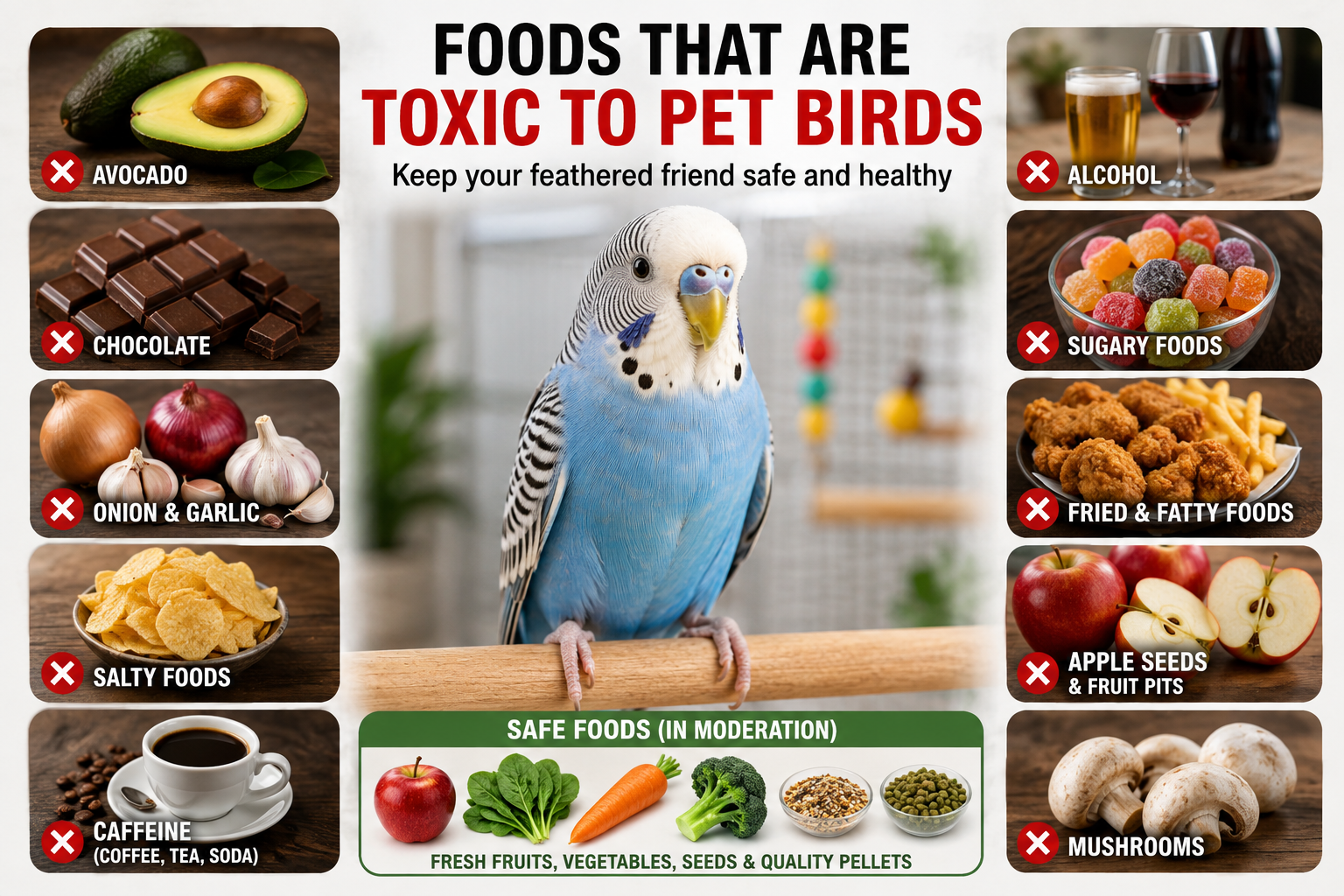
Pet birds bring color, joy, and companionship into our lives. Whether you own a budgie, cockatiel, African Grey, lovebird, macaw, or parrot, keeping them healthy starts with the right diet. Many bird owners believe that if a food is healthy for humans, it must also be safe for birds. Unfortunately, that is not true. Several common foods found in almost every kitchen can be dangerous and even deadly for pet birds.
Understanding foods that are toxic to pet birds is one of the most important parts of responsible bird ownership. Even a small amount of certain foods can cause serious health problems. This guide explains the most dangerous foods, why they are harmful, and what you should feed your feathered friend instead.
Why Birds Are Sensitive to Certain Foods
Pet birds have a much faster metabolism than humans. Their small bodies process food differently, which means toxins can affect them much more quickly. Foods that seem harmless to people can damage a bird’s heart, liver, kidneys, or nervous system.
Birds are also naturally curious. They enjoy tasting whatever their owners are eating. Because of this behavior, accidental poisoning is more common than many people realize.
Knowing what to avoid can protect your bird from preventable illness and help it live a long, healthy life.
Avocado Is Extremely Dangerous
Avocado is one of the most well known toxic foods for birds. It contains a natural substance called persin, which is harmless to many people but highly poisonous to birds.
Even a small bite of avocado can cause breathing difficulties, weakness, fluid buildup around the heart, and sudden death in severe cases.
Every part of the avocado is unsafe, including the fruit, skin, leaves, and seed. Never allow your bird to taste avocado in any form.
Chocolate Can Be Fatal
Chocolate is another food that should never be offered to pet birds. It contains theobromine and caffeine, both of which are toxic to birds.
Eating chocolate may cause symptoms such as increased heart rate, vomiting, seizures, hyperactivity, and even death if enough is consumed.
Dark chocolate contains more theobromine than milk chocolate, making it even more dangerous. Keep chocolate products stored safely away from curious birds.
Caffeine Is Harmful
Many people enjoy coffee, tea, energy drinks, and soft drinks every day. However, caffeine is highly toxic to birds.
Caffeine can increase heart rate, cause irregular heartbeat, restlessness, muscle tremors, and seizures. Because birds have tiny bodies, even a few drops can have serious effects.
Never let your bird drink coffee, tea, cola, energy drinks, or any beverage containing caffeine.
Alcohol Should Never Be Given
Alcohol is dangerous for all pets, including birds. Their bodies cannot process alcohol safely.
Even small amounts may lead to poor coordination, breathing problems, organ damage, coma, and death.
Keep alcoholic beverages out of reach and never allow your bird to sip from your glass.
Onion and Garlic
Onions and garlic are common cooking ingredients, but they can be harmful to pet birds when consumed in significant amounts.
These foods contain sulfur compounds that may damage red blood cells, leading to anemia and weakness. They can also irritate the digestive system.
It is best to avoid feeding onions, garlic, onion powder, garlic powder, or foods heavily seasoned with these ingredients.
Apple Seeds and Fruit Pits
Fresh apples are healthy for birds when properly prepared. However, the seeds contain cyanide producing compounds that can be toxic.
The same applies to pits from fruits such as peaches, cherries, apricots, and plums.
Always remove all seeds and pits before offering fresh fruit to your pet bird.
Salt Is Dangerous
Birds require only a tiny amount of sodium in their diet. Too much salt can quickly become harmful.
Salty foods may cause dehydration, kidney damage, excessive thirst, and serious health complications.
Avoid feeding chips, salted popcorn, crackers, processed snacks, instant noodles, and other salty human foods.
Fresh fruits, vegetables, and specially formulated bird pellets are much safer choices.
Sugary Foods
While a little natural sugar from fruit is acceptable, processed sugary foods should be avoided.
Candy, cakes, cookies, pastries, and sweet desserts provide little nutritional value. Regular consumption may contribute to obesity, diabetes, and liver problems.
Pet birds thrive on balanced nutrition rather than sugary treats.
Fried and Fatty Foods
Many birds enjoy tasting fried foods because of their smell and texture. However, these foods contain excessive fat that birds cannot handle well.
French fries, fried chicken, burgers, pizza, and similar foods may contribute to obesity, heart disease, and fatty liver disease.
Healthy birds should eat fresh vegetables, fruits, seeds in moderation, and quality bird pellets instead.
Raw Beans
Certain raw beans contain harmful compounds called lectins that can be toxic to birds.
Kidney beans are especially dangerous when uncooked.
Cooked beans are generally safe after thorough preparation, but raw beans should never be offered.
Mushrooms
Some mushroom varieties contain toxins that can damage the liver and digestive system.
Because it is difficult to identify safe and unsafe mushrooms, many avian experts recommend avoiding them altogether.
Choosing safer vegetables like carrots, broccoli, spinach, and bell peppers is a better option.
Xylitol and Artificial Sweeteners
Xylitol is an artificial sweetener found in sugar free gum, candy, toothpaste, and baked goods.
Although research on birds is limited, many veterinarians recommend avoiding xylitol completely because of its harmful effects in other animals.
Always keep products containing artificial sweeteners away from your bird.
Dairy Products
Birds are not lactose tolerant like humans. Large amounts of milk, cheese, cream, and ice cream can upset their digestive system.
Small amounts may not always cause serious problems, but dairy products should never become a regular part of a bird’s diet.
Fresh water should always be available instead.
Moldy or Spoiled Food
Never feed your bird food that is moldy, stale, or spoiled.
Mold produces toxins that can cause severe illness and may even be fatal.
Check fresh produce daily and remove uneaten food from the cage before it spoils.
Clean food bowls regularly to prevent bacterial growth.
Foods High in Seasonings
Many human meals contain spices, butter, sauces, oils, and seasonings that birds should not eat.
Highly seasoned foods often contain excess salt, sugar, onion powder, garlic powder, preservatives, and unhealthy fats.
Instead of sharing your dinner, prepare plain fresh vegetables or bird safe fruits as treats.
Safe Foods for Pet Birds
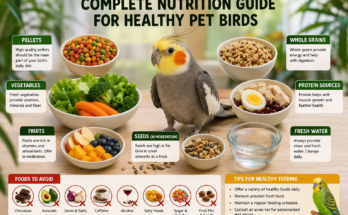
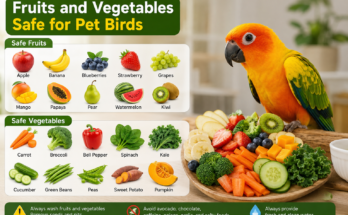
Knowing what birds can safely eat is just as important as knowing what to avoid.
Healthy options include:
Fresh apples without seeds
Bananas
Blueberries
Strawberries
Mango
Papaya
Carrots
Broccoli
Spinach
Bell peppers
Peas
Sweet potato
Cooked brown rice
Cooked quinoa
Cooked oats
Bird pellets recommended by your veterinarian
These foods provide important vitamins, minerals, and fiber while supporting your bird’s overall health.
Signs of Food Poisoning in Birds
If your bird accidentally eats toxic food, watch for warning signs such as:
Loss of appetite
Vomiting
Weakness
Difficulty breathing
Diarrhea
Tremors
Loss of balance
Seizures
Unusual sleepiness
Sudden changes in behavior
Because birds often hide illness until they become very sick, quick action is essential.
What to Do If Your Bird Eats Toxic Food
If you believe your bird has eaten something poisonous, stay calm and contact an avian veterinarian immediately.
Do not try home remedies unless instructed by a veterinary professional.
If possible, tell the veterinarian exactly what your bird ate, how much was consumed, and when it happened. This information helps determine the best treatment.
Fast medical attention can save your bird’s life.
Tips to Prevent Accidental Poisoning
Keep toxic foods stored safely away from your bird.
Never allow birds to eat directly from your plate.
Teach family members which foods are unsafe.
Read ingredient labels carefully before sharing any food.
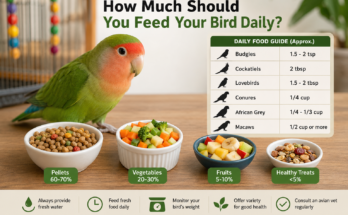
Provide a balanced diet based mainly on quality pellets, fresh vegetables, and bird safe fruits.
Supervise your bird whenever it is outside the cage.
Regularly clean food bowls and remove spoiled food.
These simple habits greatly reduce the risk of accidental poisoning.
Conclusion
Understanding foods that are toxic to pet birds is essential for every bird owner. While many fruits and vegetables are healthy, foods such as avocado, chocolate, caffeine, alcohol, onion, garlic, salty snacks, sugary treats, raw beans, and fruit seeds can cause serious illness or even death.
A balanced diet made up of high quality bird pellets, fresh vegetables, safe fruits, and clean water is the best way to support your bird’s health. Always research new foods before offering them, and when in doubt, consult an avian veterinarian.
Your pet bird depends on you for every meal. By choosing safe foods and avoiding toxic ones, you can help your feathered companion enjoy a happier, healthier, and longer life.