Introduction
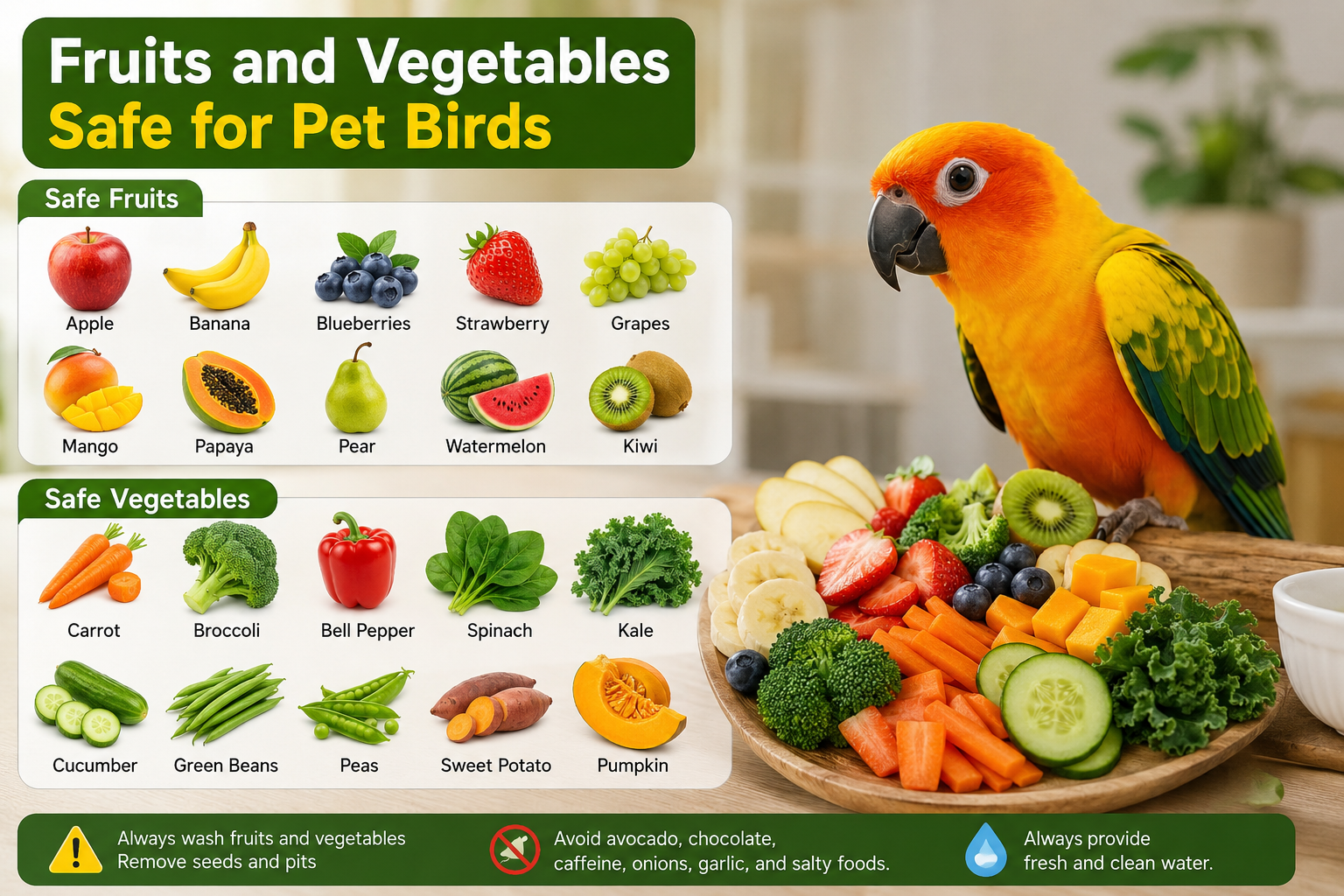
Keeping a pet bird healthy starts with offering the right food every day. While high quality bird pellets and seeds are important, fresh fruits and vegetables safe for pet birds are just as valuable. They provide natural vitamins, minerals, fiber, and antioxidants that help support a bird’s immune system, feathers, digestion, and overall health.
Many bird owners are unsure which fresh foods are safe and which ones should be avoided. The good news is that there are many healthy fruits and vegetables your bird can enjoy. The key is choosing fresh produce, washing it properly, and serving it in small portions.
In this guide, I will share the best fruits and vegetables safe for pet birds, explain their health benefits, discuss foods to avoid, and give practical feeding tips to keep your feathered friend happy and healthy.
Why Fresh Fruits and Vegetables Matter
Wild birds eat a wide variety of natural foods every day. They consume fruits, leaves, flowers, seeds, berries, and vegetables depending on the season. Pet birds also benefit from a diverse diet instead of eating only seeds.
Fresh fruits and vegetables help birds by providing essential nutrients that are difficult to get from seeds alone. They improve digestion, strengthen immunity, support healthy skin and feathers, and encourage natural foraging behavior.
Adding colorful foods to your bird’s diet also prevents boredom and makes mealtime more enjoyable.
Best Fruits Safe for Pet Birds
There are many delicious fruits that are completely safe for pet birds when served correctly.
Apples
Apples are one of the best fruits for pet birds. They contain fiber, vitamin C, and antioxidants. Always remove the seeds before feeding because apple seeds contain compounds that can be harmful.
Slice the apple into small bite sized pieces to make eating easier.
Bananas
Bananas are soft, sweet, and easy for birds to eat. They provide potassium, vitamin B6, and natural energy.
Offer banana in moderation because it contains natural sugar.
Blueberries
Blueberries are packed with antioxidants that support a healthy immune system. Most birds enjoy picking them up and eating them whole.
Fresh blueberries are always better than canned or sweetened varieties.
Strawberries
Strawberries are rich in vitamin C and fiber. Wash them thoroughly to remove any dirt or chemicals before serving.
Cut large strawberries into smaller pieces for smaller birds.
Grapes
Seedless grapes are safe and refreshing for pet birds. They contain vitamins and plenty of water that helps keep birds hydrated.
Because grapes contain natural sugars, feed them as an occasional treat instead of a daily meal.
Mango
Fresh mango is full of vitamins A and C. Many parrots love its sweet taste and soft texture.
Remove the pit and cut the fruit into small cubes before serving.
Papaya
Papaya supports healthy digestion because it contains natural digestive enzymes. It is also rich in vitamin A, making it an excellent choice for colorful parrots and other pet birds.
Pears
Pears are another safe fruit that offers fiber and vitamins. Remove the seeds before feeding and cut the fruit into manageable pieces.
Watermelon
Watermelon is an excellent summer treat. Its high water content helps birds stay hydrated during hot weather.
Remove all seeds before serving.
Kiwi
Kiwi provides vitamin C, vitamin E, and antioxidants. Peel the skin if your bird prefers softer foods and offer small slices.
Best Vegetables Safe for Pet Birds
Vegetables should make up a larger portion of your bird’s fresh food because they are generally lower in sugar than fruits.
Carrots
Carrots are rich in beta carotene, which the body converts into vitamin A. This nutrient supports healthy eyesight, skin, and feathers.
Birds can eat grated carrots, thin slices, or cooked carrots without seasoning.
Broccoli
Broccoli contains calcium, vitamin C, and fiber. Both the florets and stems are safe for birds.
Serve raw or lightly steamed without adding salt or butter.
Bell Peppers
Bell peppers are colorful, crunchy, and highly nutritious. Red, yellow, green, and orange peppers are all safe.
They provide vitamin A and vitamin C while adding variety to your bird’s meals.
Spinach
Spinach contains many nutrients including iron and vitamin A. However, it should only be fed occasionally because it contains oxalates that may reduce calcium absorption.
Kale
Kale is considered one of the healthiest leafy greens for birds. It offers calcium, vitamins, and antioxidants that support overall health.
Wash it carefully before feeding.
Cucumber
Cucumber is refreshing and contains plenty of water. It is especially useful during warmer months.
Serve it with or without the skin after washing it well.
Green Beans
Fresh green beans are safe and provide fiber, vitamins, and minerals.
Most birds enjoy chewing on the entire bean.
Peas
Green peas are packed with protein, vitamins, and fiber. Fresh or frozen peas that have been thawed are both good options.
Sweet Potatoes
Cooked sweet potatoes are highly nutritious and rich in vitamin A.
Never add butter, sugar, or seasoning before serving.
Pumpkin
Cooked pumpkin provides vitamins and fiber that support healthy digestion.
Fresh pumpkin is a much healthier option than sweetened canned pie filling.
Fruits and Vegetables Birds Love
Every bird has different preferences. Some birds enjoy crunchy vegetables while others prefer soft fruits.
Popular choices include apples, bananas, blueberries, carrots, broccoli, kale, bell peppers, cucumbers, peas, and mangoes.
Try introducing different foods one at a time until you discover your bird’s favorites.
Fruits and Vegetables to Feed in Moderation
Although many fruits are healthy, they contain natural sugars that should not become the main part of a bird’s diet.
Feed these in small amounts.
Bananas
Grapes
Mangoes
Watermelon
Pears
Offering different fruits throughout the week provides better nutrition than feeding the same fruit every day.
Foods That Are Dangerous for Pet Birds
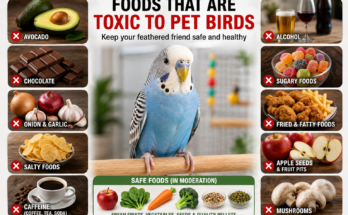
Knowing which foods to avoid is just as important as knowing which foods are safe.
Never feed your bird these foods.
Avocado
Chocolate
Caffeine
Alcohol
Onions
Garlic in large amounts
Apple seeds
Fruit pits
Raw beans
Salty foods
Sugary snacks
Processed foods
These foods can cause serious health problems and should always be kept away from pet birds.
How to Prepare Fresh Produce
Always wash fruits and vegetables carefully before feeding them to remove dirt and pesticides.
Cut food into small pieces that match your bird’s size.
Remove seeds, pits, and any spoiled sections.
Serve fresh food in a clean dish and remove leftovers after a few hours to prevent bacteria from growing.
Clean food bowls daily to keep your bird healthy.
How Much Fresh Food Should Birds Eat
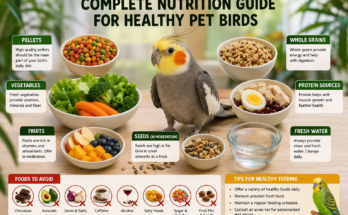
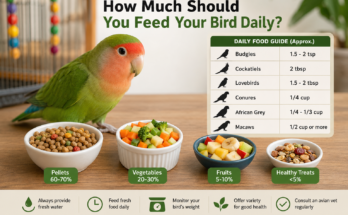
Fresh fruits and vegetables should be a regular part of your bird’s diet but should not replace balanced pellets.
A healthy diet often includes high quality pellets as the primary food, fresh vegetables every day, moderate amounts of fruits, and occasional healthy seeds or nuts depending on the bird species.
Always adjust portion sizes based on your bird’s size and consult an avian veterinarian if you are unsure.
Tips for Introducing New Foods
Some birds are naturally cautious around unfamiliar foods.
Introduce only one new fruit or vegetable at a time.
Place fresh food near your bird’s favorite food.
Eat healthy food in front of your bird because many birds enjoy copying their owners.
Offer the same food several times before deciding your bird dislikes it.
Be patient because some birds need multiple attempts before accepting new foods.
Common Feeding Mistakes
Many new bird owners accidentally make feeding mistakes that can affect their pet’s health.
Giving too many seeds is one of the biggest mistakes because seed only diets lack important nutrients.
Another common mistake is offering too much fruit while ignoring vegetables.
Some owners also leave fresh food inside the cage all day, allowing bacteria to grow.
Avoid seasoning vegetables with salt, butter, or spices because birds do not need these ingredients.
Conclusion
Choosing the right fruits and vegetables safe for pet birds is one of the easiest ways to improve your bird’s health and happiness. Fresh produce provides essential vitamins, minerals, antioxidants, and fiber that support healthy feathers, strong immunity, better digestion, and increased energy.
Offer a colorful variety of safe fruits like apples, bananas, blueberries, papaya, kiwi, and mango alongside nutritious vegetables such as carrots, broccoli, kale, bell peppers, peas, and sweet potatoes. Remember to wash produce thoroughly, remove seeds and pits, and serve everything in moderation.
A balanced diet combined with clean water, regular exercise, and proper care will help your pet bird enjoy a longer, healthier, and more active life.