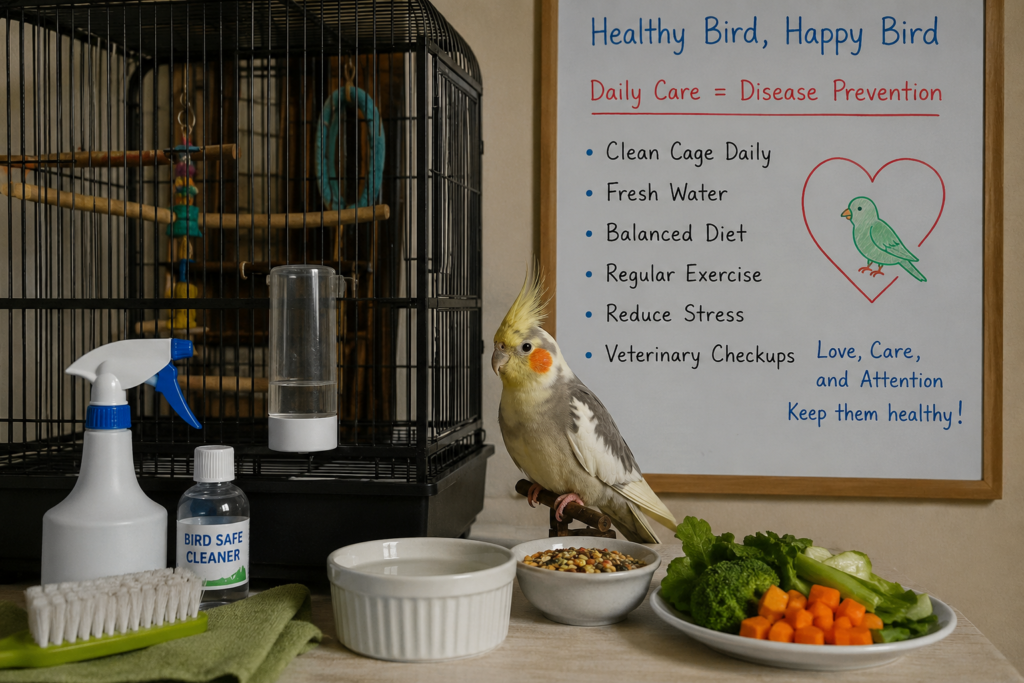
Pet birds are wonderful companions that bring joy, color, and personality into any home. Whether you own a budgie, cockatiel, lovebird, parrot, or canary, keeping your feathered friend healthy should always be your top priority. Many bird diseases can be prevented with proper care, good hygiene, a balanced diet, and regular observation.
Learning how to prevent diseases in pet birds is much easier than treating an illness after it develops. Birds often hide signs of sickness until they become seriously ill, so prevention is the best way to ensure your pet enjoys a long and happy life.
In this guide, you will learn the most effective ways to keep your pet bird healthy and reduce the risk of common diseases.
Why Disease Prevention Is Important
Birds have sensitive immune systems. Poor nutrition, dirty cages, stress, and exposure to harmful bacteria or viruses can quickly make them sick. Unlike dogs or cats, birds naturally hide weakness because showing illness in the wild makes them easy targets for predators.
This means bird owners should focus on prevention instead of waiting for symptoms to appear.
Healthy birds are more active, have brighter feathers, sing more often, maintain a healthy appetite, and enjoy interacting with their owners.
Provide a Balanced and Nutritious Diet
One of the biggest factors in preventing diseases is proper nutrition.
Many owners make the mistake of feeding only seeds. While birds enjoy seeds, they do not provide all the nutrients birds need for good health.
A healthy diet should include:
- High quality bird pellets
- Fresh vegetables
- Fresh fruits in moderation
- Small amounts of healthy seeds
- Fresh herbs
- Clean drinking water
Good vegetables include:
- Carrots
- Broccoli
- Spinach
- Bell peppers
- Peas
- Sweet potatoes
Safe fruits include:
- Apples without seeds
- Blueberries
- Strawberries
- Mango
- Papaya
Avoid giving birds junk food, chocolate, avocado, alcohol, caffeine, onion, garlic, and salty snacks because these foods can be dangerous or even fatal.
Proper nutrition strengthens the immune system and helps prevent many illnesses.
Keep the Cage Clean Every Day
A dirty cage becomes the perfect place for bacteria, mold, fungi, and parasites to grow.
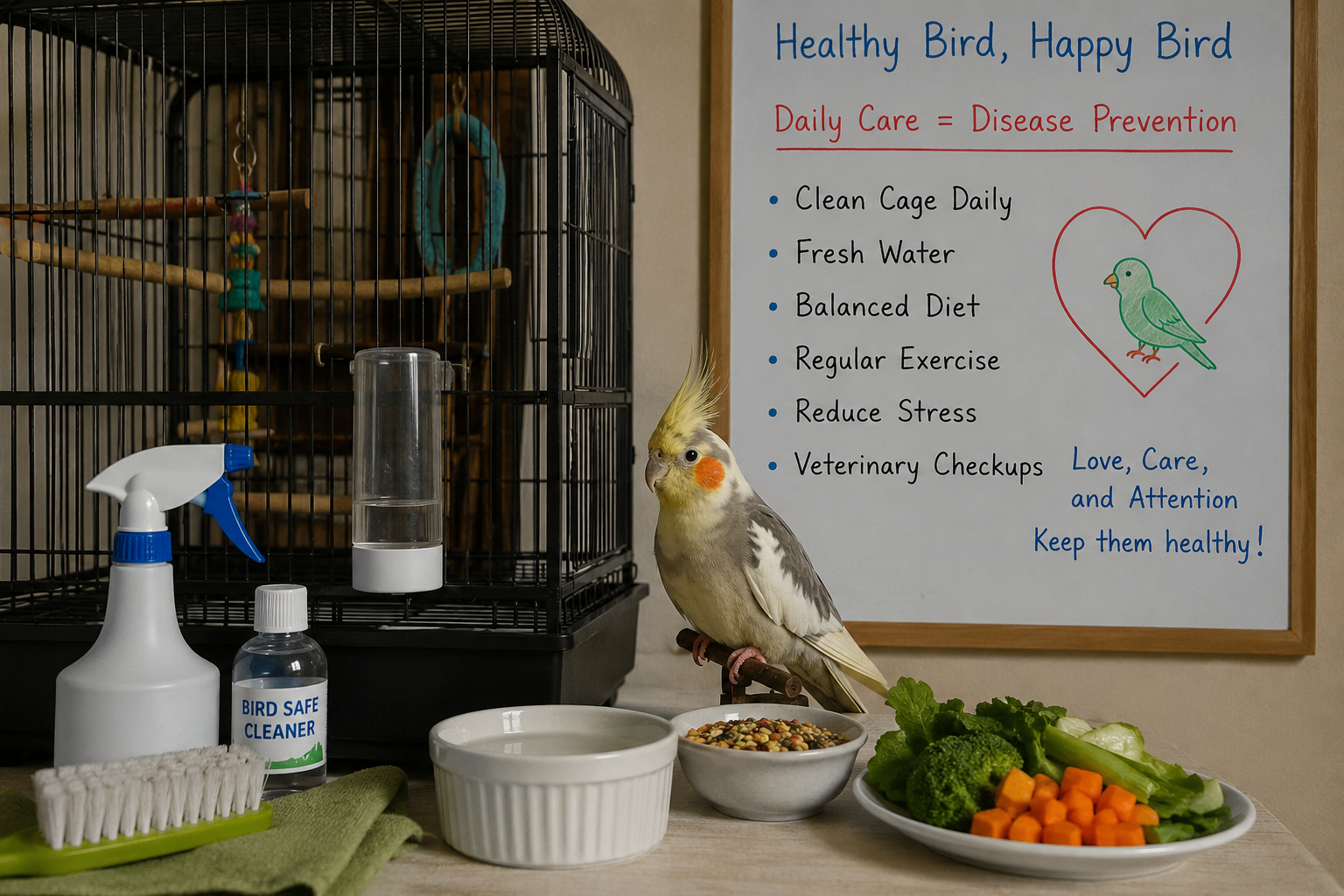
Cleaning your bird’s cage daily is one of the easiest ways to prevent diseases in pet birds.
Daily cleaning should include:
- Replace dirty cage paper
- Remove leftover food
- Wash food bowls
- Wash water containers
- Remove droppings
Weekly cleaning should include:
- Wash perches
- Clean toys
- Scrub cage bars
- Disinfect safe cage surfaces
- Allow everything to dry completely before returning your bird
Always use bird-safe cleaning products because strong household chemicals may harm your bird.
Always Provide Fresh Water
Fresh water is essential for good bird health.
Dirty water quickly collects bacteria that may cause infections.
Replace drinking water every day and wash the bowl thoroughly before refilling it.
During hot weather, changing the water twice daily is even better.
Maintain Proper Cage Size
A cramped cage increases stress and limits exercise.
Stress weakens the immune system, making birds more vulnerable to disease.
Your bird should have enough space to:
- Stretch both wings
- Fly short distances if possible
- Climb comfortably
- Move freely between perches
A larger cage encourages natural movement and improves both physical and mental health.
Give Your Bird Regular Exercise
Exercise keeps birds physically fit and mentally active.
Depending on the species, allow supervised out-of-cage time every day in a safe room.
Provide plenty of:
- Perches
- Swings
- Ladders
- Climbing toys
- Foraging toys
Exercise helps prevent obesity, fatty liver disease, and boredom-related behaviors.
Reduce Stress
Stress is one of the leading causes of illness in pet birds.
Common causes of stress include:
- Loud noises
- Sudden changes
- Poor sleep
- Lack of attention
- Dirty cages
- Overcrowding
- Frequent handling by strangers
Create a calm environment where your bird feels safe.
Most birds need around 10 to 12 hours of uninterrupted sleep every night.
Covering the cage with a breathable cloth during bedtime may help some birds sleep better if recommended for their species and environment.
Quarantine New Birds
If you bring home another bird, never place it directly with your existing bird.
New birds may carry diseases without showing symptoms.
A quarantine period of at least 30 days helps protect your healthy birds.
During quarantine:
- Use separate cages
- Wash hands between handling birds
- Use different food bowls
- Watch for signs of illness
If the new bird appears healthy after the quarantine period, you can slowly introduce the birds.
Schedule Regular Veterinary Checkups
Routine health examinations help detect diseases before they become serious.
An avian veterinarian can check for:
- Nutritional deficiencies
- Parasites
- Bacterial infections
- Beak problems
- Feather issues
- Weight changes
Annual wellness exams are recommended for most pet birds, while older birds or those with existing health concerns may need more frequent visits.
Watch for Early Signs of Illness
Because birds hide sickness, owners should observe them every day.
Possible warning signs include:
- Sleeping more than usual
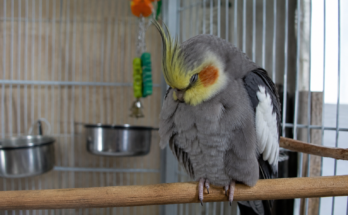
- Fluffed feathers all day
- Loss of appetite
- Weight loss
- Difficulty breathing
- Tail bobbing
- Sneezing
- Nasal discharge
- Watery droppings
- Feather plucking
- Sitting at the bottom of the cage
- Reduced activity
Early treatment often results in faster recovery.
Keep Food Fresh
Spoiled food can grow dangerous bacteria and mold.
Remove fresh fruits and vegetables after a few hours.
Never leave wet food sitting in the cage all day.
Store bird food in airtight containers to keep it dry and free from insects.
Discard any food that smells unusual or shows signs of mold.
Practice Good Personal Hygiene
Bird owners can accidentally spread germs between birds.
Always:
- Wash your hands before handling your bird.
- Wash your hands after cleaning the cage.
- Clean food bowls daily.
- Disinfect cleaning tools regularly.
Good hygiene protects both you and your pet bird.
Prevent Exposure to Harmful Chemicals
Birds have extremely sensitive respiratory systems.
Many common household products release fumes that can seriously harm birds.
Keep birds away from:
- Cigarette smoke
- Air fresheners
- Perfumes
- Aerosol sprays
- Paint fumes
- Cleaning chemicals
- Nonstick cookware fumes from overheated pans
Fresh, clean air greatly supports respiratory health.
Control Parasites
External parasites like mites and lice can cause irritation, feather damage, and infections.
Prevent parasites by:
- Keeping cages clean
- Washing accessories regularly
- Buying birds from trusted breeders
- Scheduling routine veterinary checks
- Avoiding contact with infected birds
If you notice excessive scratching or feather loss, consult an avian veterinarian promptly.
Avoid Overcrowding
Housing too many birds together increases the spread of disease.
Each bird should have enough personal space to eat, sleep, and move comfortably.
Overcrowding also increases stress and aggressive behavior.
If you own multiple birds, provide multiple feeding stations and adequate cage space.
Strengthen Your Bird’s Immune System
Healthy birds naturally resist disease better.
Support your bird’s immune system by providing:
- Balanced nutrition
- Daily exercise
- Clean housing
- Fresh water
- Proper sleep
- Mental stimulation
- Regular veterinary care
Healthy routines create stronger, happier birds.
Common Mistakes That Increase Disease Risk
Many illnesses can be traced back to simple mistakes.
Avoid these common problems:
- Feeding only seeds
- Skipping cage cleaning
- Using dirty water bowls
- Ignoring unusual behavior
- Introducing new birds without quarantine
- Using toxic household cleaners
- Keeping birds in smoky rooms
- Not providing enough exercise
- Delaying veterinary care
Correcting these habits greatly reduces disease risk.
Conclusion
Understanding how to prevent diseases in pet birds is one of the most valuable skills every bird owner can develop. Prevention is always easier, safer, and less expensive than treating illness after it appears.
By providing a nutritious diet, maintaining a clean cage, offering fresh water every day, reducing stress, encouraging regular exercise, and scheduling routine veterinary checkups, you can help your bird stay healthy for many years.
Pay close attention to your bird’s daily behavior because even small changes can signal the beginning of a health problem. With consistent care, patience, and proper hygiene, your feathered companion can enjoy a long, active, and disease-free life.