Pet birds are wonderful companions, but they are also very good at hiding illness. In the wild, birds often hide signs of weakness to protect themselves from predators. Because of this natural behavior, many pet owners do not realize their bird is sick until the illness becomes serious.
Learning the early signs your pet bird is sick can help you get veterinary care before the condition becomes life threatening. Careful observation of your bird’s daily habits, eating patterns, and behavior is one of the best ways to keep your feathered friend healthy.
This guide explains the most common warning signs of illness in pet birds and what you should do if you notice them.
Why Birds Hide Illness
One of the biggest challenges of bird ownership is that birds rarely show obvious symptoms during the early stages of disease. By the time they appear tired or weak, they may have been sick for several days or even weeks.
That is why every bird owner should spend time watching their bird every day. Even small changes can be important.
Fluffed Up Feathers for Long Periods
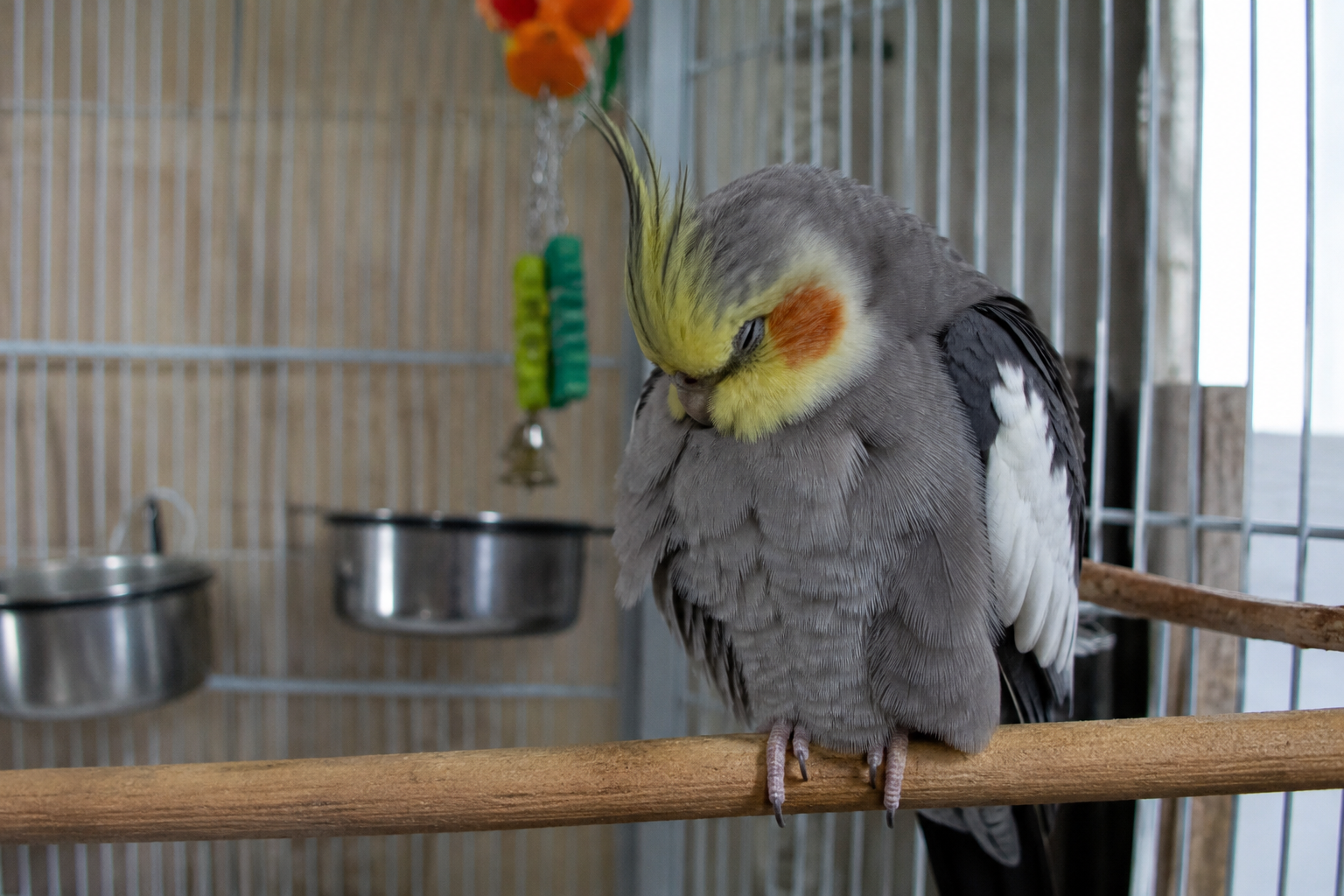
Healthy birds fluff their feathers for short periods while resting or sleeping. However, if your bird stays puffed up all day, it may be trying to conserve body heat because it is not feeling well.
A bird that remains fluffed up for hours, especially while inactive, should never be ignored.
If this behavior continues for more than one day, contact an avian veterinarian.
Loss of Appetite
A healthy bird usually eats several times throughout the day. If your pet suddenly refuses food or eats much less than normal, it could be one of the earliest signs of illness.
Loss of appetite may be caused by infections, digestive problems, stress, liver disease, or many other health conditions.
Monitor your bird’s food intake carefully. Even a small bird can become dangerously weak after missing meals.
Weight Loss
Weight loss is often difficult to notice because feathers hide the bird’s body shape.
The best way to monitor your bird’s health is by using a small digital gram scale. Weigh your bird every week and keep a record.
Unexpected weight loss usually indicates an underlying medical problem that requires professional attention.
Sleeping More Than Normal
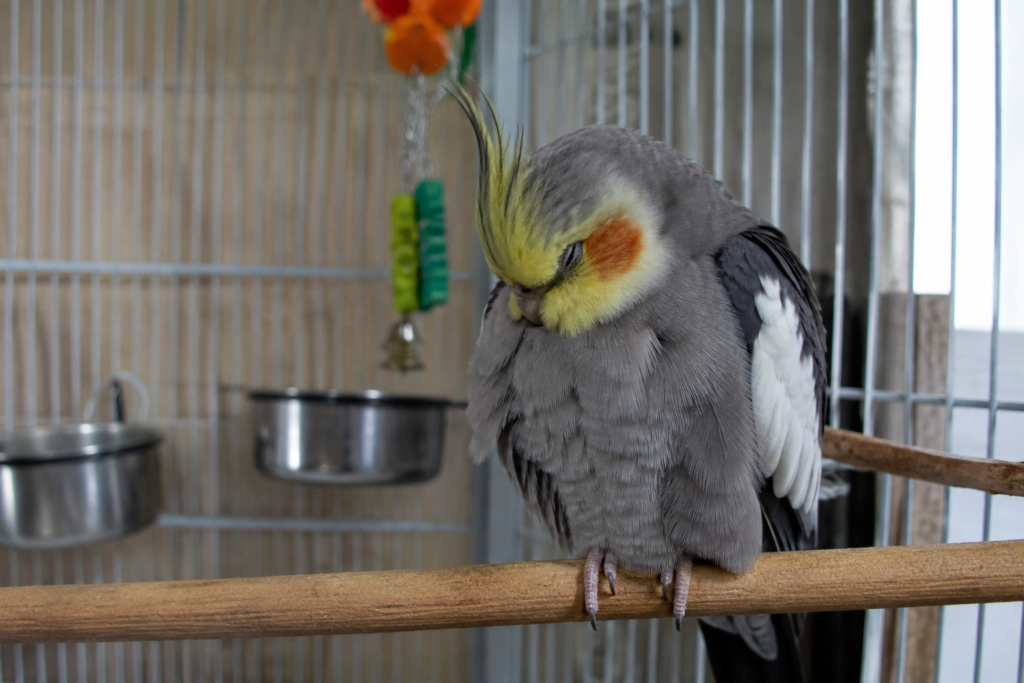
Birds need regular sleep, but excessive sleeping during the day is not normal.
If your normally active bird spends most of the day sleeping, keeps both eyes closed for long periods, or seems difficult to wake up, it may be sick.
Fatigue often appears before other obvious symptoms.
Changes in Droppings
A bird’s droppings provide valuable clues about its health.
Healthy droppings generally have three parts.
A solid dark portion
A white urate portion
A small amount of clear liquid
Watch for these warning signs.
Very watery droppings
Blood in droppings
Black tar like stool
Bright yellow or green urates
Strong unusual odor
Complete absence of droppings
Any major or sudden change should be evaluated by an avian veterinarian.
Difficulty Breathing
Breathing problems are always considered an emergency in birds.
Signs include
Open mouth breathing
Tail bobbing with each breath
Wheezing
Clicking sounds
Rapid breathing
Stretching the neck while breathing
If your bird shows any breathing difficulty, seek veterinary care immediately.
Nasal or Eye Discharge
Healthy birds have clean eyes and nostrils.
Discharge from the eyes or nose may indicate respiratory infections, allergies, or bacterial disease.
Other symptoms may include
Swollen eyelids
Red eyes
Sneezing
Wet feathers around the nostrils
These signs should never be ignored.
Dirty Vent Area
The vent is the area where birds pass droppings.
A healthy vent should remain clean.
If droppings stick to the feathers around the vent, it may indicate diarrhea, digestive disease, or infection.
Clean the feathers carefully if recommended by your veterinarian, but also identify the underlying cause.
Vomiting or Regurgitation
Bird owners sometimes confuse vomiting with normal regurgitation.
Regurgitation is often a sign of affection or courtship and usually appears controlled.
Vomiting is different.
Food may be forcefully thrown around the cage, and the bird may shake its head repeatedly.
True vomiting requires immediate veterinary examination.
Reduced Activity
Healthy birds enjoy climbing, playing, flying, and interacting with people.
If your bird suddenly becomes quiet, stops playing with toys, or avoids movement, something may be wrong.
Low energy is one of the most common signs your pet bird is sick.
Sitting at the Bottom of the Cage
Birds naturally spend most of their time on perches.
If your bird remains on the cage floor for long periods, it may be too weak to perch.
This symptom often indicates serious illness and should be treated as an emergency.
Feather Changes
Feathers reveal a lot about overall health.
Watch for
Broken feathers
Dull appearance
Excessive feather loss
Poor feather growth
Stress bars
Excessive feather plucking
While molting is normal, unusual feather problems may indicate nutritional deficiencies, stress, parasites, or disease.
Changes in Voice
If your bird suddenly becomes unusually quiet or its normal sounds change, it could indicate illness.
Respiratory infections often affect vocal ability.
Some birds may stop singing altogether when they do not feel well.
Drinking Too Much or Too Little
Changes in water consumption should always be monitored.
Excessive drinking may suggest kidney disease, diabetes, or infection.
Drinking much less than normal can quickly lead to dehydration.
Keep fresh water available at all times and observe daily intake.
Swollen Beak or Nails
Overgrown or abnormal beaks and nails may indicate nutritional deficiencies or liver disease.
Healthy beaks should remain smooth without cracks or discoloration.
Any unusual growth deserves veterinary evaluation.
Trembling or Weakness
A bird that shakes constantly or struggles to balance may have neurological problems, weakness, poisoning, or severe illness.
Weak grip strength is another warning sign.
Healthy birds usually grip their perch firmly.
Limping or Difficulty Perching
Leg injuries, arthritis, fractures, or infections can affect movement.
If your bird favors one leg or has trouble standing, avoid handling it unnecessarily until a veterinarian examines it.
Seizures or Loss of Balance
Loss of coordination, falling from perches, head tilting, or seizures require emergency medical attention.
Possible causes include
Head injury
Toxin exposure
Brain disorders
Severe infections
Calcium deficiency
Immediate treatment gives the best chance of recovery.
Aggressive or Unusual Behavior
Behavior changes can be early signs of illness.
A normally friendly bird may become aggressive.
An active bird may suddenly avoid interaction.
Some birds become unusually quiet while others become restless.
Know your bird’s normal personality so you can recognize changes quickly.
Common Causes of Bird Illness
Many health problems develop because of poor care or environmental factors.
Common causes include
Poor nutrition
Dirty cages
Contaminated food or water
Stress
Cold temperatures
Poor air quality
Exposure to cigarette smoke
Household chemicals
Toxic plants
Heavy metal poisoning
Preventing these risks greatly improves your bird’s health.
What You Should Do If Your Bird Looks Sick
If you notice any warning signs, remain calm and observe your bird carefully.
Keep the cage warm and quiet.
Provide fresh food and clean water.
Avoid unnecessary handling because sick birds become stressed easily.
Do not give human medications unless specifically prescribed by an avian veterinarian.
Record symptoms, eating habits, droppings, and weight changes before visiting the veterinarian.
The more information you provide, the easier it will be to diagnose the problem.
How to Prevent Illness
Prevention is always better than treatment.
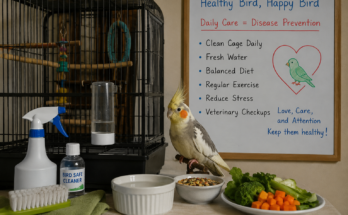
Feed a balanced diet that includes high quality pellets, fresh vegetables, and safe fruits.
Clean food bowls and water dishes every day.
Wash the cage regularly.
Provide mental stimulation with toys and daily interaction.
Allow regular exercise outside the cage in a safe environment.
Schedule routine wellness examinations with an avian veterinarian.
Observe your bird daily so you can quickly recognize changes.
When to Visit an Avian Veterinarian
Some symptoms require immediate medical attention.
Seek emergency care if your bird has
Difficulty breathing
Continuous vomiting
Severe bleeding
Seizures
Sudden inability to stand
Rapid weight loss
Sitting on the cage floor
Complete refusal to eat
Waiting too long can significantly reduce the chances of recovery.
Conclusion
Recognizing the signs your pet bird is sick can make the difference between a quick recovery and a serious medical emergency. Birds naturally hide illness, so even small changes in behavior, appetite, breathing, droppings, or activity should never be ignored.
Spend a few minutes observing your bird every day. Knowing what is normal for your pet allows you to spot problems early and seek veterinary care before the condition worsens. With proper nutrition, a clean environment, regular checkups, and close observation, you can help your feathered companion enjoy a long, healthy, and happy life.