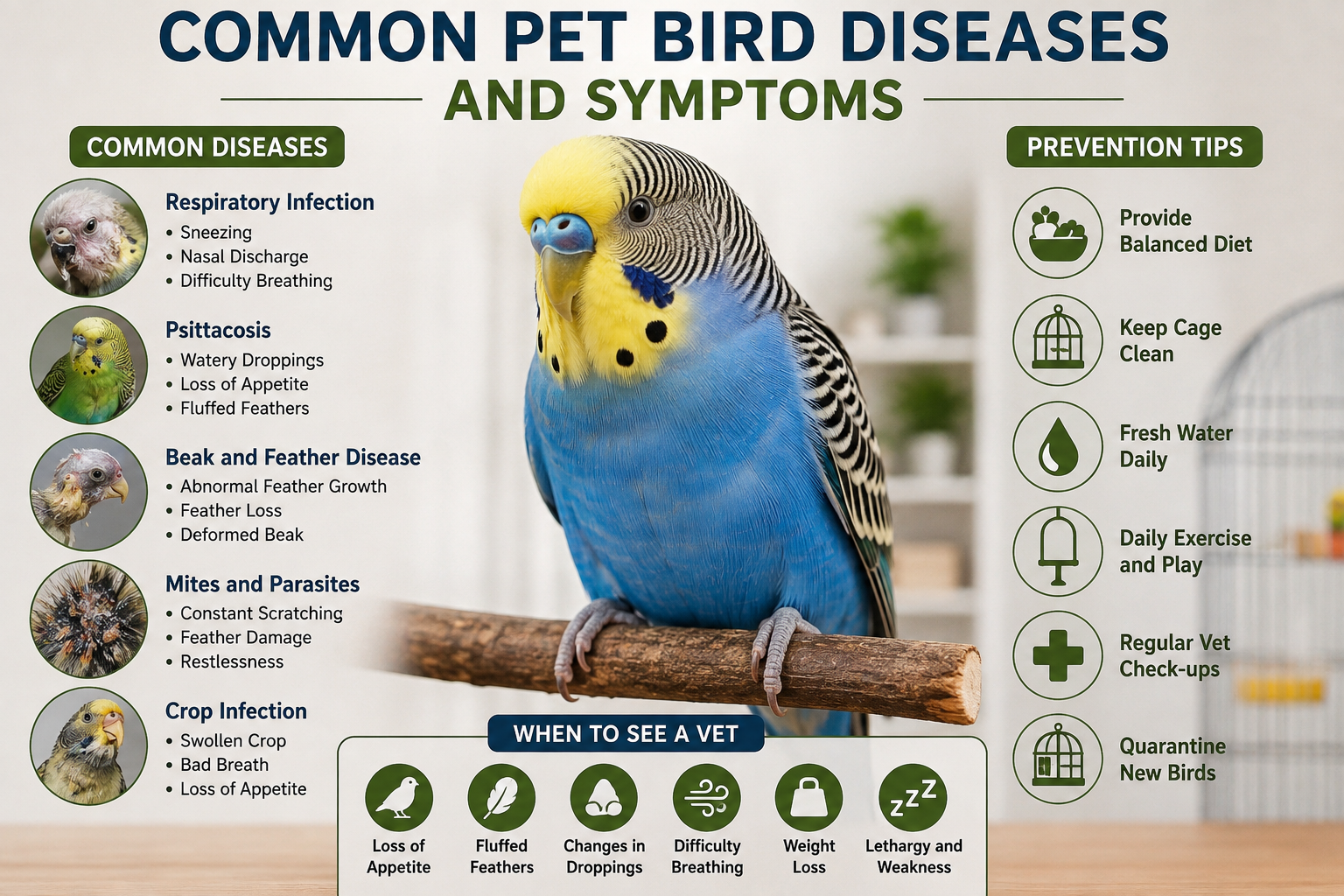
Pet birds are wonderful companions. They are intelligent, colorful, and full of personality. Whether you own a budgie, cockatiel, lovebird, parrot, or canary, keeping your feathered friend healthy should always be your top priority. Many new bird owners do not realize that birds often hide signs of illness until the disease becomes serious. This natural behavior makes it very important to recognize the early warning signs of sickness.
Learning about Common Pet Bird Diseases can help you protect your bird and seek treatment before the condition becomes life threatening. In this guide, you will discover the most common illnesses that affect pet birds, their symptoms, possible causes, and simple ways to prevent them.
Why Birds Hide Their Illness
In the wild, birds hide weakness to avoid becoming easy targets for predators. Pet birds still have this instinct. By the time a bird starts showing obvious symptoms, the illness may already be advanced.
This is why bird owners should observe their pets every day. Small changes in behavior, eating habits, or appearance can be early signs that something is wrong.
Common Signs of a Sick Bird
Before discussing specific diseases, it helps to know the general symptoms that indicate illness.
Common warning signs include:
- Loss of appetite
- Fluffed up feathers for long periods
- Sleeping more than usual
- Weight loss
- Difficulty breathing
- Tail bobbing while breathing
- Sneezing or coughing
- Watery eyes
- Nasal discharge
- Changes in droppings
- Vomiting
- Weakness
- Less activity
- Poor balance
- Feather loss unrelated to molting
If your bird shows one or more of these symptoms, it is best to consult an avian veterinarian as soon as possible.
Psittacosis
Psittacosis is one of the most well known Common Pet Bird Diseases. It is caused by bacteria and mainly affects parrots, cockatiels, budgies, and lovebirds.
Symptoms
- Green watery droppings
- Difficulty breathing
- Eye discharge
- Loss of appetite
- Weight loss
- Fluffed feathers
- Weakness
This disease can also spread to humans, although it is uncommon with proper hygiene.
Prevention
Keep cages clean, quarantine new birds before introducing them to others, and schedule regular health checkups.
Respiratory Infections
Respiratory infections are very common in pet birds. These infections may be caused by bacteria, fungi, viruses, or poor environmental conditions.
Symptoms
- Sneezing
- Wheezing
- Open mouth breathing
- Tail bobbing
- Nasal discharge
- Clicking sounds while breathing
Dust, cigarette smoke, poor ventilation, and sudden temperature changes often make respiratory problems worse.
Prevention
Keep the cage clean, avoid smoke around birds, maintain fresh air circulation, and provide a balanced diet that supports the immune system.
Feather Plucking
Feather plucking is a behavioral and medical condition where birds pull out their own feathers.
Symptoms
- Missing feathers
- Bald patches
- Damaged skin
- Excessive grooming
- Stress related behavior
This condition may be caused by stress, boredom, poor nutrition, skin infections, or parasites.
Prevention
Give your bird daily interaction, toys, mental stimulation, and a healthy diet. If feather plucking continues, consult an avian veterinarian.
Beak and Feather Disease
Beak and Feather Disease is a viral illness that mainly affects parrots.
Symptoms
- Abnormal feather growth
- Feather loss
- Weak immune system
- Cracked beak
- Deformed beak
Young birds are especially vulnerable.
Prevention
Avoid purchasing birds from unreliable breeders. Always isolate new birds before introducing them to your existing pets.
Egg Binding
Egg binding affects female birds when they cannot lay an egg naturally.
Symptoms
- Swollen abdomen
- Weakness
- Sitting on the cage floor
- Straining
- Difficulty breathing
Egg binding is a medical emergency and requires immediate veterinary care.
Prevention
Provide enough calcium, proper nutrition, exercise, and nesting management.
Avian Mites and Parasites
External parasites such as mites can make birds extremely uncomfortable.
Symptoms
- Constant scratching
- Feather damage
- Dry skin
- Restlessness
- Weight loss in severe cases
Internal parasites may also affect digestion and overall health.
Prevention
Maintain excellent cage hygiene and purchase birds only from trusted sources.
Crop Infection
The crop stores food before digestion. Bacterial or fungal infections can affect this organ.
Symptoms
- Bad breath
- Slow digestion
- Swollen crop
- Regurgitation
- Loss of appetite
Young birds that are hand fed may be more likely to develop crop infections.
Prevention
Use clean feeding equipment and prepare fresh food for every feeding session.
Fatty Liver Disease
Fatty Liver Disease is common in birds that eat too many seeds and not enough fresh foods.
Symptoms
- Obesity
- Long beak growth
- Weakness
- Yellowish droppings
- Poor feather condition
Birds that live inactive lifestyles have a higher risk.
Prevention
Offer fresh vegetables, fruits in moderation, quality pellets, and daily exercise.
Vitamin A Deficiency
Poor nutrition is one of the leading causes of illness in pet birds. Vitamin A deficiency weakens the immune system and affects breathing.
Symptoms
- White patches inside the mouth
- Respiratory infections
- Poor feather quality
- Reduced appetite
- Eye problems
Prevention
Feed foods rich in Vitamin A, including carrots, sweet potatoes, pumpkin, spinach, and red peppers.
Bumblefoot
Bumblefoot is a painful bacterial infection that affects the feet.
Symptoms
- Swollen feet
- Red sores
- Difficulty standing
- Limping
- Reduced activity
Improper perches and poor cage hygiene often contribute to this condition.
Prevention
Use natural wood perches of different sizes and keep cage floors clean.
Digestive Problems
Digestive disorders can occur because of spoiled food, bacterial infections, or sudden diet changes.
Symptoms
- Diarrhea
- Vomiting
- Weight loss
- Poor appetite
- Dehydration
Prevention
Always provide fresh food, clean water, and avoid feeding toxic human foods.
How to Prevent Common Pet Bird Diseases
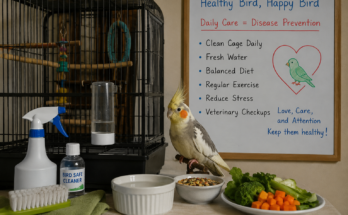
Preventing illness is much easier than treating it. Good daily care can greatly reduce the risk of disease.
Healthy habits include:
- Clean the cage every day.
- Replace food and water regularly.
- Feed a balanced diet.
- Provide fresh vegetables.
- Allow daily exercise.
- Keep birds away from smoke.
- Reduce stress.
- Quarantine new birds for at least 30 days.
- Schedule regular veterinary checkups.
- Observe your bird every day for unusual behavior.
Foods That Support Bird Health
A healthy diet strengthens the immune system and lowers the risk of many diseases.
Good food choices include:
- High quality bird pellets
- Fresh leafy greens
- Carrots
- Broccoli
- Bell peppers
- Sweet potatoes
- Apples without seeds
- Blueberries
- Cooked brown rice
- Cooked quinoa
Avoid feeding chocolate, avocado, onions, garlic, alcohol, caffeine, and foods high in salt or sugar because they can be toxic to birds.
When to Visit a Veterinarian
Birds can become seriously ill very quickly. Do not wait several days if your bird appears sick.
Seek immediate veterinary care if your bird:
- Stops eating
- Has difficulty breathing
- Shows severe weakness
- Has continuous vomiting
- Has blood in droppings
- Experiences seizures
- Cannot stand properly
- Suffers an injury
Early treatment often gives birds the best chance of recovery.
Final Thoughts
Understanding Common Pet Bird Diseases is one of the most important responsibilities of every bird owner. Birds often hide illness, making it essential to notice even small changes in behavior, appetite, feathers, or droppings. By providing a clean environment, nutritious food, regular exercise, and routine veterinary care, you can greatly reduce the risk of disease and help your feathered companion live a long, healthy life.
A healthy bird is active, curious, and full of energy. Paying close attention every day and responding quickly to unusual symptoms can make all the difference. With proper knowledge and consistent care, new bird owners can enjoy many happy years with their beloved pet birds.