Introduction
If you are looking for a complete Budgie Care Guide, you are in the right place. Budgies are one of the most popular pet birds in the world because they are friendly, intelligent, colorful, and easy to care for compared to many other bird species. They can become wonderful companions when given proper attention, a healthy diet, and a safe environment.
Many first time bird owners choose budgies because they are small, affordable, and capable of learning words and tricks. However, owning a budgie is still a long term responsibility. A healthy budgie can live between 10 and 15 years, and some even live longer with excellent care.
This Budgie Care Guide will help you understand everything you need to know about keeping your feathered friend healthy, happy, and active.
Choosing a Healthy Budgie
The first step in proper budgie care is selecting a healthy bird. Whether you buy from a breeder or adopt from a rescue center, always observe the bird carefully before bringing it home.
A healthy budgie should have bright eyes, clean feathers, and smooth breathing. It should be active, curious, and alert. Avoid birds that look sleepy all the time, have dirty feathers around the tail, or show signs of labored breathing.
A young budgie usually adjusts more quickly to a new home and can be easier to tame with patience and regular interaction.
Setting Up the Perfect Cage
A comfortable cage is one of the most important parts of this Budgie Care Guide.
Choose the largest cage you can afford because budgies love flying and climbing. A wider cage is better than a tall one since budgies fly horizontally.
Place the cage in a bright room where the family spends time, but avoid direct sunlight all day, cold drafts, kitchens, and noisy areas.
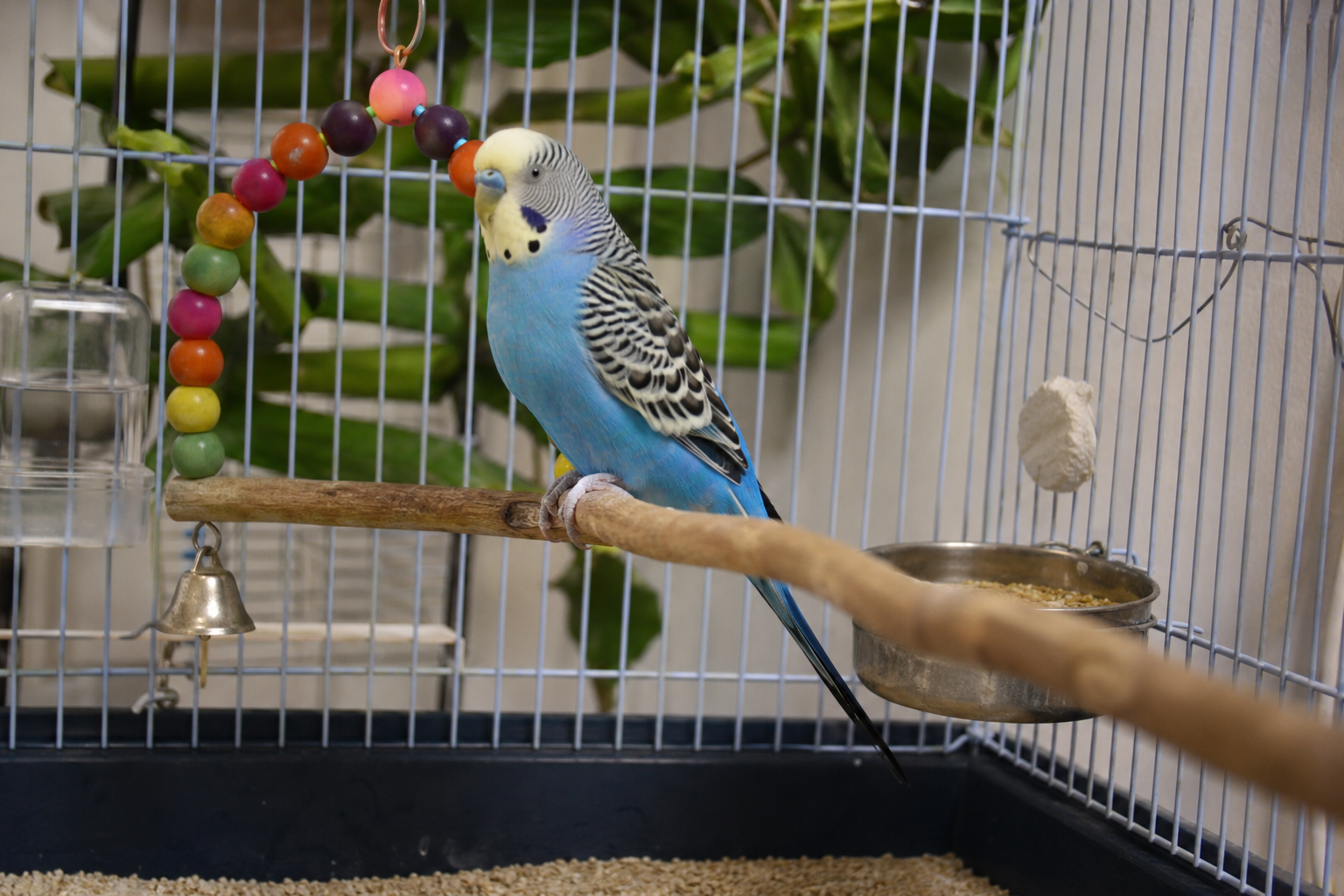
Your budgie’s cage should include natural wooden perches of different sizes, food bowls, water containers, safe bird toys, and a swing if your budgie enjoys it.
Clean the cage floor daily and wash food and water dishes every day to prevent bacteria from growing.
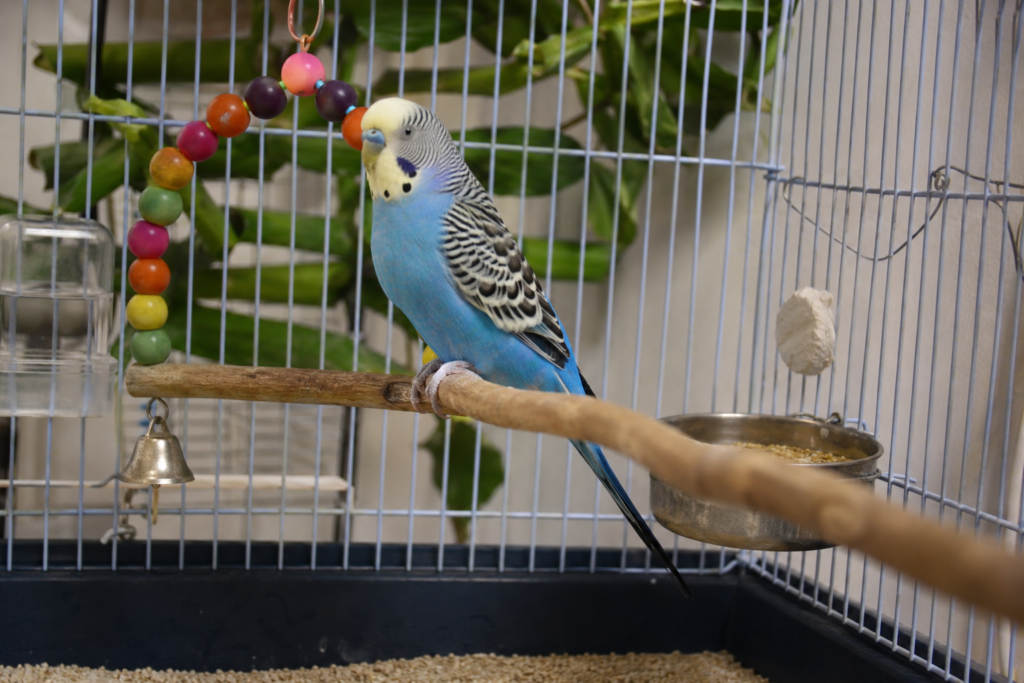
Best Diet for Budgies
Proper nutrition plays a huge role in keeping your budgie healthy.
Many people think budgies only eat seeds, but that is not true. A balanced diet should include high quality pellets, fresh vegetables, limited fruits, and a small amount of seeds.
Good vegetables include spinach, broccoli, carrots, bell peppers, peas, and leafy greens.
Healthy fruits include apples without seeds, blueberries, strawberries, mango, and melon. Fruits should only be offered in moderation because they contain natural sugar.
Fresh clean water should always be available. Replace the water every day and clean the bowl regularly.
Never feed your budgie chocolate, avocado, onion, garlic, alcohol, caffeine, or salty foods because they are toxic to birds.
Daily Exercise and Flying Time
Exercise is essential for a healthy budgie.
Allow your budgie to spend time outside the cage every day in a bird safe room. Flying helps strengthen muscles, improves heart health, and prevents obesity.
Before letting your budgie out, close all windows and doors, turn off ceiling fans, cover mirrors, and remove dangerous objects.
If free flight is not possible every day, provide plenty of climbing toys, ladders, ropes, and swings inside the cage to encourage movement.
Active budgies are happier and less likely to develop behavioral problems.
Social Interaction and Bonding
Budgies are highly social birds that enjoy spending time with their owners.
Talk to your budgie throughout the day using a calm and friendly voice. Even if your bird does not understand every word, it becomes familiar with your voice and learns to trust you.
Offer treats by hand to build confidence. Millet spray is one of the favorite treats for most budgies.
Avoid grabbing or chasing your bird because this can create fear and damage trust.
With patience and consistency, many budgies become comfortable sitting on their owner’s finger or shoulder.
Mental Stimulation
A bored budgie can become unhappy and may develop unwanted behaviors.
Provide a variety of safe bird toys including bells, ropes, wooden chew toys, puzzle toys, and ladders.
Rotate toys every few weeks to keep your budgie interested.
You can also teach simple tricks such as stepping onto your finger, flying to your hand, or ringing a small bell.
Training sessions should be short, fun, and always reward positive behavior.
Grooming and Hygiene
Budgies naturally keep themselves clean, but they still need some help from their owners.
Offer a shallow dish of clean water for bathing several times each week. Some budgies also enjoy being lightly misted with clean water.
Never use soap or shampoo on your bird unless recommended by an avian veterinarian.
Keep the cage clean to reduce bacteria, dust, and unpleasant odors.
Most healthy budgies wear down their nails naturally when using different sized natural wood perches. If the nails become too long, seek professional trimming instead of attempting it yourself.
Understanding Budgie Behavior
Learning your budgie’s body language makes caring for your bird much easier.
A happy budgie often chirps, sings, stretches its wings, and plays with toys.
Grinding the beak before sleeping usually means your budgie feels relaxed and comfortable.
Fluffed feathers during sleep are normal, but if your budgie stays puffed up all day, refuses food, or sits quietly for long periods, it could be a sign of illness.
Rapid breathing, tail bobbing, unusual droppings, weight loss, or lack of activity should never be ignored.
Birds often hide signs of illness, so early veterinary care is very important.
Keeping Your Budgie Safe
Creating a safe home environment is another important part of this Budgie Care Guide.
Keep your budgie away from toxic plants, scented candles, cigarette smoke, air fresheners, and strong cleaning chemicals.
Nonstick cookware can release fumes that are extremely dangerous for birds when overheated.
Always supervise your budgie during out of cage time.
Keep other household pets such as cats and dogs away from your bird unless carefully supervised.
Check toys regularly for broken parts that could cause injury.
Sleep Requirements
Budgies need plenty of rest to stay healthy.
Most budgies require around 10 to 12 hours of uninterrupted sleep every night.
Place the cage in a quiet area during bedtime or cover the cage with a breathable cage cover if needed.
Avoid loud music, bright lights, and constant disturbances during sleeping hours.
Good sleep helps support the immune system and reduces stress.
Regular Veterinary Care
Even healthy budgies should receive regular health checkups from an avian veterinarian.
Annual examinations can detect health problems before they become serious.
Watch for changes in eating habits, drinking, droppings, breathing, or activity levels.
If your budgie suddenly stops eating, loses weight, or appears weak, seek veterinary care immediately because birds can become seriously ill very quickly.
Preventive care is always better than waiting until your bird becomes sick.
Common Mistakes New Budgie Owners Make
Many beginners unknowingly make simple mistakes that affect their budgie’s health.
Feeding only seeds is one of the most common problems. A balanced diet is much healthier.
Keeping a budgie in a small cage limits exercise and causes boredom.
Ignoring social interaction can lead to loneliness and stress.
Skipping regular cleaning increases the risk of bacterial infections.
Using unsafe household products around birds can also create serious health risks.
Learning from these mistakes will help your budgie live a longer and happier life.
Tips for a Happy Budgie
Spend time with your budgie every day.
Provide fresh food and clean water.
Offer safe toys and rotate them regularly.
Allow supervised flying whenever possible.
Keep the cage clean.
Maintain a consistent daily routine.
Visit an avian veterinarian regularly.
Treat your budgie with patience and kindness.
These simple habits can greatly improve your bird’s quality of life.
Conclusion
Following this Budgie Care Guide will help you become a confident and responsible bird owner. Budgies are loving, playful, and intelligent companions that reward proper care with years of friendship and entertainment. By providing a spacious cage, balanced nutrition, daily exercise, mental stimulation, regular cleaning, and routine veterinary care, you can ensure your budgie enjoys a healthy and fulfilling life. Every budgie has its own personality, so take time to understand your bird’s needs, build trust, and enjoy the special bond that grows stronger every day. With patience, consistency, and proper care, your budgie can become a cherished member of your family for many years.